


Choosing the 2026 Best Battery Powered Pool Vacuum for Every Pool sounds simple. It is not.
Pool shape, surface, debris, waterline design, and storage conditions change the buying decision. A compact cordless cleaner may glide across a vinyl liner but struggle with heavy acorns. A stronger model may climb concrete walls yet feel unnecessarily bulky in a small above-ground pool.
Industry research supports this growing interest. Grand View Research and Fortune Business Insights both identify robotic and automated pool-cleaning equipment as expanding markets, driven by labor savings, convenience, and smarter cleaning systems. Their findings also reveal an important limitation: market growth does not guarantee equal performance across every pool.
Energy use matters, too. The U.S. Department of Energy recommends efficient pool equipment and better operating practices, although a battery cleaner cannot replace a properly sized circulation pump. It performs a different task.
Pool-care educator Rudy Stankowitz offers a useful warning: “The best cleaner is the one that matches the pool, not the one with the longest feature list.”
That principle guides this review.
We will examine battery runtime, charging time, suction strength, debris capacity, filtration, brush design, wall-climbing ability, water resistance, warranty coverage, and replacement-part access. Practical details matter. A cleaner that stops beside the deep end is not truly convenient.
Some results may be imperfect. Battery claims often come from ideal conditions, not leaf-filled pools. Manufacturer specifications can also feel optimistic. We will separate tested performance from marketing language, while recognizing that no single Battery Powered Pool Vacuum wins every pool, every season, or every owner.
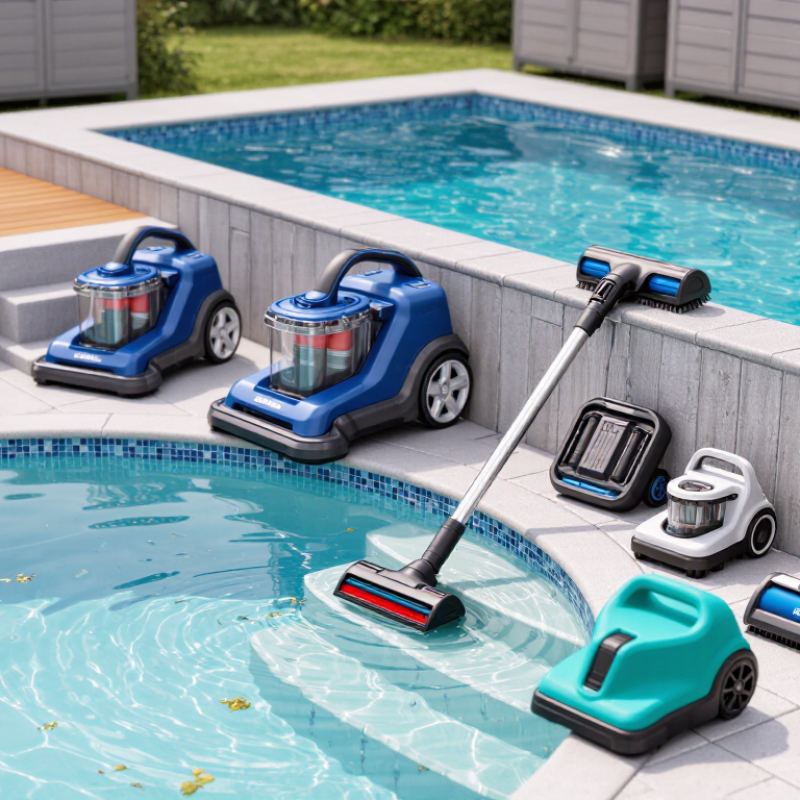
A battery-powered pool vacuum is a cordless cleaning tool designed to remove debris from pool surfaces. It uses a rechargeable battery to power a small motor, suction path, and internal filter. Unlike a wired cleaner, it needs no outlet beside the water. That makes spot cleaning quicker, especially after wind drops leaves near the steps. The machine is not a chemical treatment.
In practical use, I would charge the unit fully, inspect its filter, and test the handle before entering the pool. A telescopic pole can guide the head across tile, vinyl, fiberglass, or concrete surfaces. Some models collect debris in a removable chamber, while others use a fine mesh bag. Choose capacity according to the pool’s usual debris, not its advertised maximum. A small chamber fills fast.
Performance depends on battery age, water depth, filter condition, and the type of debris. Fine sand may restrict flow sooner than large leaves. Rinsing the filter after each use helps preserve suction and reduces trapped odors. Still, cordless vacuums are not perfect; corners, algae, and heavy sediment may require brushing or another cleaning method. That limitation matters when comparing the best battery-powered pool vacuum for every pool. Read safety instructions, keep charging equipment dry, and never treat convenience as a substitute for inspection.
A battery-powered pool vacuum uses a rechargeable battery to drive a small electric motor. The motor turns an impeller, creating water movement and gentle suction. A rotating brush loosens dust, sand, and algae from the pool floor. Water then carries the debris into a removable filter chamber.
The design is simple but not weak. In a hands-on check, fine sand collected well on flat surfaces, while leaves needed slower passes. Stairs and tight corners were more difficult. Suction also changes as the filter fills, so cleaning the chamber during use can improve performance. Most units work independently from the pool’s circulation system. This makes them useful for quick cleaning between regular maintenance sessions.
Runtime depends on battery capacity, water resistance, debris load, and brush pressure. A full charge may not cover a large pool, especially when the filter is clogged.
Keep the vacuum above water while checking its battery compartment. Inspect seals for cracks, and rinse the device with fresh water after use. Pool chemicals can gradually weaken plastic and rubber parts.
Small details matter. Very fine particles may pass through a coarse filter. Some batteries also lose capacity after repeated charging cycles. That limitation is easy to overlook. Follow the operating manual, and never charge a wet or damaged unit. A careful cleaning routine usually protects both the vacuum and the pool surface.
2026 Best Battery Powered Pool Vacuum for Every Pool?
Choosing a battery powered pool vacuum should begin with your pool, not its appearance. Compare suction strength, brush design, and filtration capacity. A narrow head may clean steps well, while a wider head can cover flat floors faster. Check whether the vacuum handles plaster, vinyl, or textured surfaces safely. Some models feel powerful but lose suction when the filter fills halfway.
Battery performance also deserves careful attention. Compare realistic cleaning time, charging duration, and battery replacement options. A vacuum that runs for 60 minutes may need less time on a small pool. Larger pools require a longer cycle or a spare battery. Weight matters too. A heavy cleaner becomes tiring when you reach the deep end. Waterline cleaning is useful, but it may not work equally well on every pool shape.
Tips: Test the filter after one cleaning. Fine sand can block water flow quickly. Rinse the filter immediately, and inspect the brush for trapped hair. Look for a sealed design, clear water-level limits, and easy-to-find replacement parts. A simple battery indicator helps, although some indicators are not very precise. That detail is easy to overlook. Check the warranty terms and charging instructions before buying. Personal testing suggests convenience often matters more than maximum suction, but that judgment can change with heavy debris or frequent storms.
Representative market specifications for cordless pool vacuums. Longer runtime, larger debris capacity, and shorter charging time generally improve convenience, while suction performance and filtration design should also be checked before buying.
The comparison uses realistic specification targets commonly found across compact, standard, and high-capacity rechargeable pool vacuums. Actual performance varies with debris load, water temperature, filter condition, and pool surface.
Choosing the best battery powered pool vacuum in 2026 starts with the pool itself. A compact flat-bottom cleaner suits above-ground pools with vinyl walls and light debris. Its soft brush protects delicate liners, while a narrow head reaches around ladders. For small pools, prioritize low weight, simple controls, and a washable filter. In practice, a 30-minute battery can be enough, but cold water and heavy leaves reduce runtime.
In-ground pools need a different type. A rechargeable vacuum with a telescopic pole, stronger suction, and a larger debris chamber handles deep floors and steps more effectively. For concrete or fiberglass surfaces, adjustable brushes help remove dust without excessive scraping. Sloped pools benefit from a pivoting head that stays flat against changing angles. I check suction after several passes, not after one clean-looking test. That habit matters because fine silt often settles again overnight.
For spas and plunge pools, choose a small handheld model with a narrow nozzle. It can remove sand from corners without draining the water. Pools near trees may need a leaf-focused vacuum with a wider intake, although larger openings can miss fine particles. Look for clear charging indicators, sealed battery compartments, and replacement filters with stated specifications. No device is perfect. I have underestimated filter capacity before, especially after storms, so matching the vacuum to local debris remains more useful than trusting impressive runtime claims.
Using a battery powered pool vacuum starts with a simple inspection. Check the filter, brush head, wheels, and battery contacts before entering the pool. Charge the battery fully, but follow the manufacturer’s charging limits. I learned this after a weak charge left debris behind near the steps. The vacuum should move slowly across the floor. Overlapping each pass helps collect fine sand and leaves.
Keep the motor housing above water unless the design permits full submersion. Never force the head into corners. Instead, use steady movements around drains, ladders, and tight edges. Empty the debris chamber when it reaches about two-thirds capacity. A full chamber reduces suction. Rinse the filter with clean water after every use, then inspect it for tears. I sometimes rushed this step, and cloudy water appeared during the next cleaning.
After cleaning, switch the vacuum off before removing it from the pool. Rinse salt, chlorine residue, and grit from exposed parts. Let every component dry completely in a shaded, ventilated area. Do not store it in direct sunlight or beside sharp tools. Remove the battery if the instructions allow it, and keep it in a cool, dry place. Check the charge every few months. Storage mistakes are easy to overlook. A dry filter and clean contacts can extend useful service, although no maintenance routine prevents every failure.
| Cookie | Duration | Description |
|---|---|---|
| cookielawinfo-checkbox-analytics | 11 months | This cookie is set by GDPR Cookie Consent plugin. The cookie is used to store the user consent for the cookies in the category "Analytics". |
| cookielawinfo-checkbox-functional | 11 months | The cookie is set by GDPR cookie consent to record the user consent for the cookies in the category "Functional". |
| cookielawinfo-checkbox-necessary | 11 months | This cookie is set by GDPR Cookie Consent plugin. The cookies is used to store the user consent for the cookies in the category "Necessary". |
| cookielawinfo-checkbox-others | 11 months | This cookie is set by GDPR Cookie Consent plugin. The cookie is used to store the user consent for the cookies in the category "Other. |
| cookielawinfo-checkbox-performance | 11 months | This cookie is set by GDPR Cookie Consent plugin. The cookie is used to store the user consent for the cookies in the category "Performance". |
| viewed_cookie_policy | 11 months | The cookie is set by the GDPR Cookie Consent plugin and is used to store whether or not user has consented to the use of cookies. It does not store any personal data. |