Top

2026 Top Animatronic Brachiosaurus For Sale Guide

The market for immersive attractions is changing quickly. A convincing dinosaur now needs more than size. It needs movement, sound, reliable control, and safe visitor interaction. This guide examines the 2026 Animatronic Brachiosaurus For Sale market through those practical requirements.

Themed Entertainment Association and AECOM reported strong attendance recovery across major global theme parks in the 2023 Theme Index. Their report recorded approximately 243.7 million visits among the world’s top 25 parks. That growth supports continued investment in large-scale educational and entertainment displays. IAAPA’s global industry research also emphasizes attractions, guest experience, operational reliability, and responsible safety management.

A Brachiosaurus installation can become a visual landmark. Its long neck may rise above a museum entrance or outdoor learning zone. Realistic skin texture matters at close range. Slow head movement feels more believable than constant motion. Quiet hydraulic systems improve comfort for nearby guests.

This article compares suppliers, materials, motion systems, control options, customization, maintenance, and delivery planning. It also explains how to evaluate quotations beyond the purchase price. A low-cost model may hide transport, installation, weatherproofing, or service expenses.

That part is often overlooked.

Professional buyers should request videos, factory photographs, technical specifications, warranty terms, and reference projects. ASTM F24 guidance and local venue requirements can help structure safety discussions, although compliance duties vary by location. No single report predicts every buyer’s outcome. Outdoor conditions, visitor volume, and staff training can change the decision. Therefore, this guide combines published industry evidence with practical purchasing questions, while recognizing that some estimates remain imperfect.

2026 Top Animatronic Brachiosaurus For Sale Guide

What Is an Animatronic Brachiosaurus?

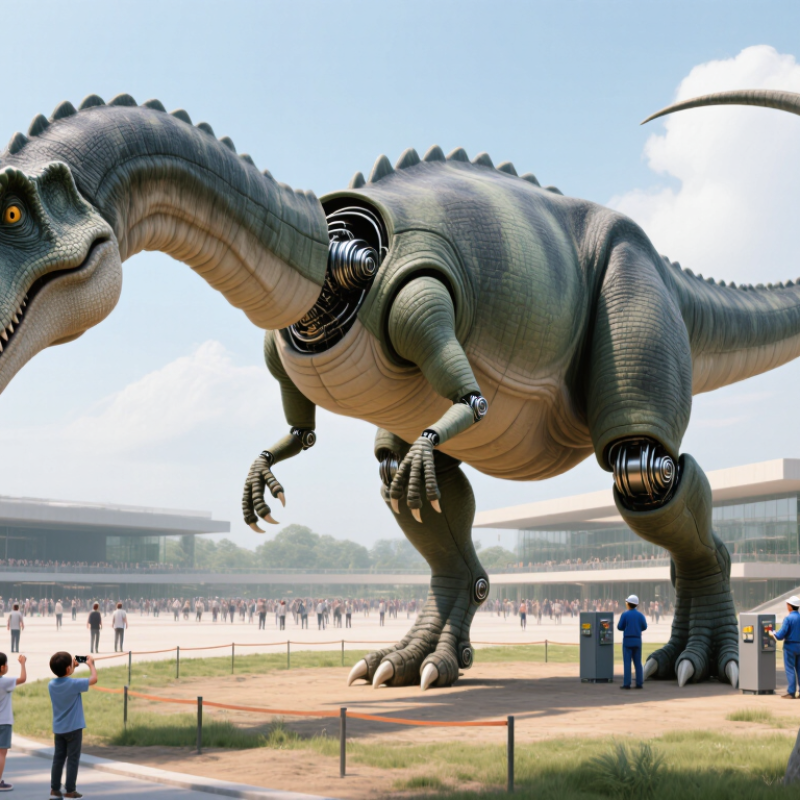
An animatronic brachiosaurus is a life-sized robotic dinosaur designed to imitate the movement, sound, and presence of the real animal. Its long neck, raised head, slow steps, and tail motion create a lifelike display for museums, educational venues, and themed attractions. Internal motors, programmable controllers, and motion sensors coordinate these actions.

The outer body usually uses sculpted foam, flexible rubber, or silicone-like materials over a strong metal frame. Textured skin, painted scales, glass-like eyes, and controlled breathing effects add realism. Sound matters. Low calls and gentle foot impacts can make the creature feel present.

When evaluating a 2026 model, inspect its movement range and operating cycle. The neck should move smoothly without sudden jerks. The feet must remain stable during repeated performances. Ask for maintenance records, power requirements, control options, and a recent operation video. Outdoor units need weather protection, sealed electronics, and suitable drainage.

A convincing dinosaur should not move too quickly. Natural motion is often slow and uneven. Some pauses can look realistic. However, excessive noise from motors may reveal poor construction. This is where buyers sometimes focus too much on appearance. The hidden frame, wiring, and service access matter just as much. A minor surface flaw may be repairable, while unreliable mechanics can become expensive and frustrating.

Key Features of 2026 Animatronic Brachiosaurus Models

2026 Top Animatronic Brachiosaurus For Sale Guide

Key Features of 2026 Animatronic Brachiosaurus Models

When inspecting a 2026 animatronic brachiosaurus, look beyond height and dramatic photographs. A reliable model should combine a reinforced steel frame, balanced weight distribution, and controlled neck movement. Quiet servo motors matter in museums, parks, and indoor exhibitions. They reduce distraction during educational talks. Look closely at the joints. Exposed gaps can collect dust and reveal weak finishing.

Modern units commonly use programmable motion sequences, infrared sensors, and adjustable sound modules. Sensor response should feel gradual, not like an abrupt switch. The neck may rise, turn, and pause while the jaw opens with measured timing. Ask for cycle demonstrations under normal power conditions. Battery and cable options also deserve attention. A well-labeled control cabinet simplifies maintenance for staff with limited technical training. Weather-resistant coatings help outdoors, but no coating makes electronics maintenance-free.

For purchasing decisions, request load ratings, material specifications, warranty terms, and service records. Check whether replacement actuators, sensors, and protective skins remain available. Testing a model after repeated cycles can reveal overheating or timing drift. First impressions can mislead. Imperfections happen. A slight sound delay may be acceptable, while unstable movement is not. Measure doorways, ceiling clearance, and flooring strength before delivery.

How to Compare Size, Materials, Motion, and Sound

2026 Top Animatronic Brachiosaurus For Sale Guide

When comparing a brachiosaurus, start with usable scale, not advertised height. A 5-meter model may need over 8 meters of clear movement space. The 2023 TEA/AECOM Global Experience Index recorded 244.6 million visits across the top 25 theme parks. That traffic level makes service access and surface durability practical concerns. Measure doors, ceiling clearance, viewing distance, and maintenance paths before ordering. I have seen impressive dinosaurs fail because installers ignored turning space.

Materials change both appearance and lifespan. Fiberglass shells provide a rigid, detailed surface, while reinforced foam can reduce weight and installation stress. Ask for UV resistance, water protection, flame-performance documentation, and replacement-part availability. ASTM F24 safety guidance is useful for evaluating moving attractions, although it does not replace a site-specific inspection. Check the joints closely. Small cracks around the neck can become expensive repairs.

Motion should look heavy, controlled, and repeatable. Compare walking cycles, neck range, tail movement, speed limits, emergency stops, and daily operating hours. Sound needs equal attention. CDC/NIOSH recommends limiting occupational exposure to 85 dBA over eight hours, so request measured sound levels at the audience line. A loud roar is not automatically realistic. In a crowded hall, softer layered effects may feel more convincing. My own preference is slower movement with clear pauses, though that choice can reduce spectacle. Test the full sequence in daylight and darkness before accepting delivery.

2026 Top Animatronic Brachiosaurus for Sale Guide

How to compare size, materials, motion, and sound before purchasing

Size: Large animatronic dinosaur exhibits commonly use planning ranges of approximately 5–10 m in height and 8–18 m in length. Confirm transport access, installation clearance, and foundation requirements.
Materials: A practical outdoor build normally combines a steel or aluminum structure with fiberglass-reinforced plastic, polyurethane foam, silicone, or flexible rubber exterior sections. Ask for corrosion protection and weather-sealing details.
Motion: Compare the number of independently controlled moving sections, such as the neck, jaw, eyes, tail, torso, and legs. More motion axes usually require more maintenance and a stronger control system.
Sound: Outdoor exhibit systems are often designed around approximately 70–95 dBA at 1 m. Confirm volume control, speaker protection, operating hours, and local noise limits before installation.

The chart shows typical planning reference ranges rather than a specific seller’s specification. Always request engineering drawings, material specifications, sound measurements, warranty terms, and maintenance requirements for the final model.

Where to Find Animatronic Brachiosaurus Models for Sale

2026 Top Animatronic Brachiosaurus For Sale Guide

Finding an animatronic Brachiosaurus for sale requires more than a quick marketplace search. Start with specialized dinosaur manufacturers, museum-exhibit fabricators, and established entertainment-equipment dealers. Their websites often show movement videos, frame materials, control systems, and available sizes. Request recent photos before trusting polished catalog images.

A reliable seller should provide clear specifications. Check the model’s height, walking clearance, power requirements, sound controls, and weather resistance. Ask whether installation, operator training, spare parts, and technical support are included. Indoor display units may not tolerate rain, dust, or strong sunlight. Shipping also needs careful planning, because a large Brachiosaurus may require a reinforced crate, liftgate delivery, and several installers.

I once underestimated doorway clearance on a large display. That mistake was expensive and avoidable.

Tips: Compare at least three written quotations. Watch a full movement demonstration, not a short clip. Ask for a service schedule and warranty terms. Read independent buyer feedback, when available. Inspect silicone skin seams, neck movement, foot stability, and emergency stop access. Local exhibit contractors can sometimes source suitable models and reduce delivery complications. However, the cheapest offer may hide weaker motors or limited after-sales support. Leave room for uncertainty, because custom animatronics rarely arrive exactly as imagined.

Safety, Installation, Maintenance, and Buyer Considerations

2026 Top Animatronic Brachiosaurus For Sale Guide

Safety begins before the dinosaur arrives. Check its total weight, movement range, power demand, and emergency-stop design. Keep visitors away from joints, cables, and rotating neck sections. A low barrier helps, but clear supervision still matters. Outdoor models need weather-resistant housings, drainage, and stable ground anchors. Wet soil can shift unexpectedly. Ask the supplier for load calculations, electrical documentation, and suitable operating temperatures. Regional installation requirements may differ, so use a qualified technician for final connections.

Installation should follow a written plan, not guesswork. Measure doorways, turning paths, ceiling height, and unloading space before purchase. A crane or forklift may be necessary for large sections. Protect painted surfaces with padded straps. After assembly, test slow movements without visitors nearby. Listen for grinding sounds and watch for uneven motion. Small alignment errors can become expensive failures. I would also record the original settings, because adjustments are easy to forget.

Maintenance should include daily visual checks and scheduled mechanical inspections. Clean dust from sensors, inspect fasteners, and examine exposed cables for cracking. Lubricate only with materials approved for the mechanism. Keep a log of faults, repairs, and operating hours. When comparing sellers, review training, spare-part availability, warranty limits, installation support, and realistic delivery dates. Do not judge only by skin texture or head movement. A quiet drive system and accessible service panels matter more after months of use. The most impressive model may still be the wrong choice if technicians cannot reach its internal components.

2026 Top Animatronic Brachiosaurus For Sale Guide - Safety, Installation, Maintenance, and Buyer Considerations
Category Data Dimension Typical Planning Data Buyer Guidance and Verification Points
Product Scope Intended use Museum exhibits, dinosaur parks, educational venues, themed attractions, retail displays, and outdoor events Confirm whether the unit is designed for indoor, covered outdoor, or fully exposed outdoor use before comparing prices.
Product Scope Overall height Approximately 4–8 m (13–26 ft), depending on the selected scale and pose Request a dimension drawing showing maximum height, tail sweep, neck movement envelope, and transport position.
Product Scope Overall length Approximately 8–18 m (26–59 ft), including the tail Use the shipping length and assembled footprint for site planning; these may differ significantly from the display length.
Product Scope Approximate total weight Commonly several hundred kilograms to more than 1,500 kg, depending on frame, base, skin, and mechanisms Obtain a certified shipping weight, operating weight, center-of-gravity information, and point-load data.
Movement System Typical animated functions Head and neck movement, jaw opening, eye movement or lighting, breathing motion, tail movement, body movement, and sound playback Ask for a movement list, operating sequence, speed limits, noise level, and emergency-stop behavior.
Movement System Actuator type Electric linear actuators, geared motors, servomotors, pneumatic cylinders, or a hybrid configuration Electric systems may simplify indoor installation; pneumatic systems require a compressor, air treatment, drainage, and additional noise control.
Electrical Supply voltage Common configurations include 100–120 V AC or 220–240 V AC, normally at 50 or 60 Hz Confirm the local voltage, frequency, phase, maximum current, plug type, and whether a dedicated circuit is required.
Electrical Protection and isolation Protective earthing, overcurrent protection, accessible isolation, cable management, and emergency-stop control are expected for public installations Have a qualified electrician inspect the installation. Use residual-current protection where required by local electrical regulations.
Safety Emergency stop At least one clearly marked emergency-stop device should stop hazardous motion and place the system in a safe state For public venues, consider multiple accessible emergency-stop stations and test them before opening each day.
Safety Moving-part protection Neck joints, jaw mechanisms, tail linkages, feet, and access panels can create crushing, shearing, entanglement, or pinch hazards Use guards, barriers, safe clearances, warning labels, controlled access, and reduced-speed modes where visitors can approach the exhibit.
Safety Public separation distance The required distance depends on movement range, site rules, barriers, and a documented risk assessment Do not rely on a generic distance. Mark a physical exclusion zone after reviewing the actual movement envelope.
Safety Fire performance Foam, coatings, fabric, cable insulation, and decorative materials should be selected to meet the venue’s applicable fire requirements Request material fire-test documentation and verify acceptance with the local fire authority or building manager.
Installation Floor loading Required capacity varies by total weight, support layout, base design, and dynamic movement A structural professional should verify distributed loads, point loads, anchors, vibration, and any elevated platform requirements.
Installation Anchoring and stability Base plates, mechanical anchors, ballast, or engineered foundations may be required, particularly outdoors Request wind-load calculations for outdoor use and never install on an unverified slab or temporary surface.
Installation Access and lifting equipment Large units may require a forklift, crane, lifting beams, rigging, and a clear route from unloading point to final location Check door height, corridor width, turning radius, ceiling clearance, crane reach, and lifting points before purchase.
Installation Typical assembly process Base positioning, frame assembly, skin installation, actuator connection, electrical commissioning, movement calibration, and safety testing Require an installation manual, wiring diagram, spare-parts list, commissioning checklist, and operator training.
Environment Outdoor protection Outdoor suitability requires protection against rain, ultraviolet exposure, condensation, dust, insects, and temperature changes Check the stated enclosure rating for electrical parts, drainage design, corrosion protection, cover requirements, and operating temperature range.
Environment Recommended operating conditions Many systems are designed for moderate ambient conditions, often around 5–35°C (41–95°F), but the actual range is model-specific Request written limits for temperature, humidity, wind, rain, snow, dust, and direct sunlight.
Maintenance Daily or pre-opening inspection Check unusual noise, loose fasteners, exposed wiring, damaged skin, fluid leaks, abnormal movement, barriers, and emergency stops Record inspection results and remove the unit from service if a safety-critical fault is found.
Maintenance Routine service interval Visual checks before use; lubrication, fastener checks, electrical inspection, and calibration at intervals defined by operating hours and supplier instructions High-use public exhibits generally require more frequent service than occasional event displays. Follow the maintenance manual.
Maintenance Consumable and replacement parts Common parts include bearings, belts, seals, cables, sensors, relays, actuator components, control fuses, paint, and skin-repair materials Confirm availability, lead time, storage requirements, part numbers, and service life before signing the purchase contract.
Noise and Visitor Experience Operating noise Noise depends on motors, gearboxes, compressors, speakers, structure, and room acoustics Request a measured sound level at a stated distance and operating mode; consider hearing comfort and nearby exhibits.
Controls Control modes Automatic cycle, manual service mode, remote trigger, sensor activation, timed schedule, and audio synchronization may be available Ask whether control access is password-protected and whether the system can restart safely after power loss.
Documentation Technical documents Product drawings, electrical schematics, risk information, operating instructions, maintenance schedule, spare-parts list, and test records Make complete documentation a contract requirement and ensure it is supplied in the operating team’s working language.
Compliance Applicable regulations Requirements may involve machinery safety, electrical safety, fire safety, structural safety, accessibility, workplace rules, and local building codes Compliance depends on the installation country and venue. Obtain professional review rather than relying only on a supplier declaration.
Commercial Terms Price comparison basis Compare the animatronic unit, control system, sound system, packaging, shipping, installation, commissioning, training, taxes, and site works separately A lower purchase price may exclude foundations, lifting equipment, electrical work, weather protection, or long-term maintenance.
Commercial Terms Warranty and after-sales service Coverage should identify the frame, mechanisms, electronics, motors, surface materials, labor, travel, and shipping responsibilities Confirm warranty duration, exclusions, response time, remote support, technician availability, and software or controller replacement terms.
Buyer Decision Pre-purchase checklist Verify dimensions, weight, movement range, power, site loads, weather conditions, safety controls, documentation, service plan, delivery scope, and total ownership cost Request a live demonstration or recorded test showing every advertised function, emergency stop, restart behavior, and control interface.