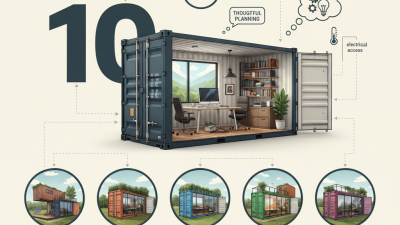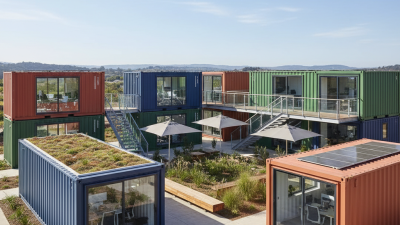


Choosing the China Best Shipping Container Home Office Supplier requires more than comparing prices or browsing polished product photos. A reliable supplier should understand steel conversion, structural reinforcement, insulation, ventilation, electrical planning, and workspace comfort. The right shipping container home office should feel like a professional room, not a metal box placed in a yard. Ask for drawings, material specifications, factory photographs, quality records, and examples of completed projects. Details matter.
Architect Adam Kalkin, widely recognized for container-based architecture, has said, “A container is a box, and a box is a building.” This simple observation explains both the opportunity and the challenge. A container offers a strong, modular shell, but it was not originally designed for quiet, naturally comfortable office work. Cutting openings can affect strength. Thin steel can create thermal bridges. Poor ventilation may leave condensation on the walls during humid weather. An experienced supplier should explain these risks clearly, not hide them behind attractive renderings.
A dependable China supplier should also provide realistic delivery information, transparent pricing, and responsive technical communication. Check how the company handles insulation thickness, window placement, floor loading, fire-resistant materials, and local installation requirements. No supplier is perfect. Small design compromises may still appear. Yet honest explanations usually reveal more professionalism than exaggerated promises. Before choosing a manufacturer, compare several quotations and inspect the proposed details line by line. The best result is not always the cheapest unit. It is a safe, durable, well-ventilated office that supports focused work through changing seasons. There is room for improvement. A thoughtful buyer should keep questioning every assumption.
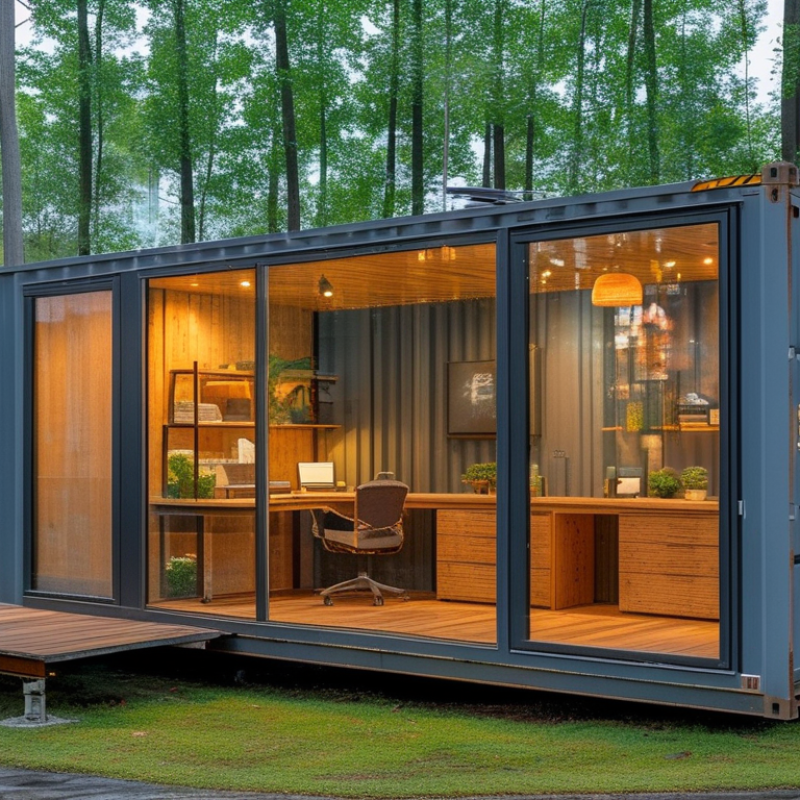
A reliable shipping container home office supplier in China should prove more than a low quotation. Experience appears in practical details, including insulation, condensation control, cable routing, fire-safe materials, and floor loading. During a factory visit, buyers should inspect welds, corner castings, door seals, and drainage slopes. Small defects often become expensive problems after installation. A serious supplier explains these risks clearly.
Professional knowledge also means providing accurate technical documents. Ask for structural calculations, material specifications, electrical diagrams, and installation instructions. The supplier should understand local building requirements and coordinate with qualified engineers when standards differ. Quality control needs recorded inspections, not verbal promises. Photos, batch records, and pre-shipment checks improve accountability. However, documents may look perfect while workmanship falls short. An independent inspection before loading remains sensible.
Reliability continues after delivery. Confirm packaging, shipping responsibilities, spare parts, response times, and warranty conditions in writing. A dependable team offers realistic schedules and admits when customization may increase costs or cause delays. This honesty matters. Some suppliers rely too heavily on standard layouts, even when climate, accessibility, and work habits require changes. Buyers should review previous projects and ask about failures. The right supplier is not flawless, but transparent, capable, and willing to correct mistakes.
China manufactures container home offices through a practical mix of steel fabrication, modular assembly, and controlled customization. Factories usually begin with a structural review of the container frame. Engineers then prepare drawings for windows, doors, insulation, electrical routes, and interior finishes.
The details matter. A reliable manufacturer should explain steel grades, welding procedures, coating thickness, and insulation performance. Factory teams may use CNC cutting, measured welding jigs, and water spray tests before delivery. They also check door alignment, roof drainage, floor strength, and electrical safety. These steps reduce installation problems at the destination. Still, drawings can miss small site conditions. Cable entry points and local weather exposure need careful confirmation.
Customization can include folding desks, built-in storage, acoustic wall panels, air conditioning, lighting, and compact bathrooms. Buyers should request material samples and a clear inspection checklist. Photos are useful, but they cannot replace dimensional checks. A responsible supplier provides production updates, packing records, and installation guidance without hiding limitations. A low quotation may look attractive. However, thinner steel, weak insulation, or rushed waterproofing can create higher costs later. The best supplier is not simply the cheapest one. It is the manufacturer that documents its process, answers technical questions clearly, and adjusts the design to local building requirements. Even experienced teams need a final review before shipment.
Choosing the best shipping container home office supplier in China requires more than a low quotation. Ask for steel grades, insulation data, weld inspection records, and moisture-control details. In practical projects, galvanized steel framing, rock wool insulation, and durable fiber-cement boards perform well. They handle heat, rain, and daily office wear. Check the floor system carefully. A sealed plywood or composite floor can reduce drafts and noise, but poor edge sealing may still cause swelling.
A productive container office needs daylight, ventilation, and thoughtful circulation. Large double-glazed windows improve comfort, while adjustable shading limits summer glare. A compact layout can include two workstations, cable routes, storage, and a small meeting corner. Electrical systems should use certified components, overload protection, and accessible service panels. Ask the supplier for drawings, load calculations, fire-resistance information, installation guidance, and previous project evidence. These documents make quality easier to verify. Still, a beautiful 3D rendering proves little. Buyers sometimes trust too quickly.
Tips: Request a sample wall section before ordering. Test window seals after rain. Confirm delivery tolerances and foundation requirements in writing. Leave space for future equipment. A quiet air conditioner may matter more than decorative panels. Even experienced buyers can overlook sound control, especially near roads or active construction areas.
| Category | Key Dimension | Typical Specification or Option | Productivity Benefit | Important Consideration |
|---|---|---|---|---|
| Container Size | 20-foot standard unit | External dimensions are approximately 6.06 m × 2.44 m × 2.59 m; internal floor area is commonly about 13–14 m² before fit-out. | Suitable for one to two workstations, a compact meeting area, or a private office. | Usable space decreases after insulation, wall lining, electrical systems, and furniture are installed. |
| Container Size | 40-foot standard or high-cube unit | External length is approximately 12.19 m; a high-cube model is approximately 2.90 m high externally and provides additional interior clearance. | Allows multiple desks, a collaboration zone, storage, and a small kitchenette or reception area. | Transport access, lifting equipment, foundation layout, and local planning rules must be confirmed before purchase. |
| Main Structure | Structural frame and shell | Weathering steel frame with corrugated steel wall and roof panels is commonly used for converted shipping containers. | Provides a strong modular enclosure that can be modified for doors, windows, and service openings. | Cutting openings can affect structural performance; reinforcement should be designed and inspected by a qualified professional. |
| Insulation | Thermal envelope | Common choices include mineral wool, glass wool, rigid boards, and closed-cell spray foam; thickness depends on the climate and building code. | Reduces heat transfer and helps maintain a stable indoor temperature during focused work. | Insulation must be continuous around walls, roof, and floor to reduce thermal bridging and condensation risk. |
| Interior Finish | Wall and ceiling lining | Plywood, gypsum board, calcium silicate board, or other code-compliant interior panels may be used over the insulated framework. | Creates a clean working environment and provides a practical surface for lighting, power outlets, and acoustic treatments. | Fire resistance, moisture resistance, cleanability, and local material standards should be checked. |
| Flooring | Office floor finish | Vinyl, laminate, engineered wood, carpet tiles, or other commercial-grade flooring can be installed over a prepared subfloor. | Improves comfort, appearance, rolling-chair performance, and ease of maintenance. | The subfloor must be level, dry, structurally sound, and protected from moisture. |
| Windows and Daylight | Glazing configuration | Double-glazed windows, fixed panes, or operable windows may be arranged on one or both long sides of the unit. | Natural light can improve visual comfort and reduce dependence on artificial lighting during the day. | Window orientation, solar shading, privacy, safety glazing, and emergency-exit requirements should be evaluated. |
| Doors and Security | Access system | Personnel doors may include insulated steel, aluminum, or glazed systems with mechanical or electronic locks. | Supports controlled access and provides a more professional entrance than the original cargo doors alone. | The layout should include accessible circulation and at least one compliant escape route where required. |
| HVAC and Ventilation | Indoor air and temperature control | Split air-conditioning systems, heat pumps, mechanical ventilation, or energy-recovery ventilation may be specified according to climate and occupancy. | Helps control temperature, humidity, carbon dioxide, and indoor air quality during long working periods. | Equipment capacity should be calculated from floor area, insulation, glazing, local weather, and expected occupancy. |
| Electrical System | Power distribution | A typical office fit-out includes a distribution board, LED lighting, general-purpose outlets, data points, grounding, and circuit protection. | Provides reliable power for computers, monitors, networking equipment, printers, and climate-control systems. | Voltage, frequency, wiring methods, protection devices, and inspection requirements vary by destination country. |
| Lighting | Workplace illumination | Recessed, surface-mounted, or linear LED fixtures can be combined with task lighting at individual desks. | Even, low-glare lighting supports reading, screen work, video meetings, and accurate visual tasks. | Final lighting levels and glare control should follow the applicable workplace and electrical standards. |
| Acoustic Design | Noise control | Mineral wool insulation, resilient interior linings, acoustic ceiling panels, seals, and soft furnishings can reduce sound transmission and reverberation. | Improves concentration, speech privacy, and the quality of online meetings. | Air-conditioning units, doors, windows, and service penetrations can become weak points in the acoustic envelope. |
| Office Layout | Workspace planning | Common layouts include a single executive office, two-person office, open workstation area, meeting room, or modular multi-unit arrangement. | A planned layout separates focused work, collaboration, circulation, storage, and equipment zones. | Furniture dimensions, door swings, wheelchair access, cable routes, and ventilation clearances must be coordinated early. |
| Connectivity | Internet and communication infrastructure | Structured data cabling, wireless networking equipment, cable trays, and dedicated equipment cabinets can be integrated into the fit-out. | Reduces cable clutter and supports stable video conferencing, cloud applications, and shared systems. | Network hardware, service availability, cybersecurity, and external internet connection are normally supplied or arranged separately. |
| Weather Protection | Exterior coating and drainage | Surface preparation, anticorrosion coating, roof sealing, flashing, gutters, and external weatherproof sealants are commonly specified. | Helps protect the office from rain, moisture intrusion, and premature corrosion. | Coating systems should match the local climate, exposure level, maintenance plan, and expected service life. |
| Foundation and Installation | Site preparation | Units may be placed on concrete pads, strip foundations, piers, or other engineered supports suitable for the ground conditions. | A stable, level base helps protect the structure, maintain door alignment, and support proper drainage. | Foundation design should account for soil, wind, snow, seismic conditions, anchoring, utilities, and local permits. |
| Sustainability | Material reuse and energy performance | Using a retired container shell can reduce demand for new structural materials, while insulation, efficient lighting, and solar-ready electrical provisions can reduce operational energy use. | Supports a lower-impact office concept when the existing container is suitable and the fit-out is designed efficiently. | Actual environmental performance depends on container condition, transport distance, materials, energy source, and building operation. |
| Compliance and Quality Control | Documentation and inspection | Important documents may include drawings, material specifications, electrical diagrams, structural calculations, fire classifications, and factory inspection records. | Clear documentation improves installation accuracy, approval processes, maintenance, and future modifications. | The finished office must comply with the destination region’s building, fire, electrical, accessibility, energy, and occupational safety requirements. |
Note: Specifications are typical planning ranges and design options for container offices. Final dimensions, materials, structural details, equipment capacity, and compliance requirements should be verified for the selected unit and installation location.
Choosing a supplier requires more than comparing glossy renderings. UNCTAD’s Review of Maritime Transport reports that about 80% of global merchandise trade by volume moves by sea. That reality makes container handling, corrosion protection, and export documentation important quality signals. Ask for steel grades, welding inspection records, paint-system details, and recent factory photographs. Check whether dimensions follow ISO 668. Small deviations can create transport problems.
Compliance must be practical. A valid CSC safety plate supports international container transport, but it does not automatically approve a converted office. Local building, electrical, fire, insulation, and accessibility rules still apply. Request wiring diagrams, circuit-protection test results, insulation values, structural calculations, and fire-rating evidence. The 2023 World Bank Logistics Performance Index also shows that shipment tracking and customs reliability affect delivery performance. Therefore, require serial-numbered packing lists, inspection checkpoints, and a clear warranty process.
Pricing needs a complete comparison. Separate the shell, windows, doors, flooring, furniture, electrical work, freight, insurance, duties, installation, and local permits. A cheap quote can look clever. It can also be incomplete. I would inspect a finished sample, open wall sections, and test doors after rain if possible. One weakness remains: online factory evidence can be staged. Use an independent pre-shipment inspection, verify production capacity, and keep milestone payments linked to measurable results. Mistakes happen, even with careful suppliers. The contract should explain who fixes them, where, and within what time.
Choosing a China-based container office supplier requires more than comparing prices. Request drawings, steel grades, insulation values, electrical specifications, and a written installation scope. ISO 668 defines standard container dimensions, but insulation and wall finishes reduce interior clearance. A standard 20-foot unit measures about 6.06 meters long and 2.44 meters wide externally. Confirm desk depth, ventilation paths, door swing, and equipment access before production. Small errors become expensive after delivery.
UNCTAD’s Review of Maritime Transport 2023 states that over 80% of global merchandise trade by volume moves by sea. That network is enormous, but it does not promise a fixed delivery date. Ask for the shipping method, port estimates, cargo dimensions, lifting points, insurance terms, and delay responsibilities. Check whether a crane, forklift, foundation, drainage, and utility connections are included. Local building, fire, accessibility, and electrical rules still apply. Do not rely on a verbal promise.
Tips: Place the office on a level, drained base. Inspect the roof, seals, floor, sockets, and HVAC before signing acceptance. Photograph hidden areas during installation. Keep spare sealant and a simple maintenance log. An honest warning: condensation control is often underestimated, especially in humid climates. Budgeting can also be imperfect; site work and permits may cost more than the module itself.
| Cookie | Duration | Description |
|---|---|---|
| cookielawinfo-checkbox-analytics | 11 months | This cookie is set by GDPR Cookie Consent plugin. The cookie is used to store the user consent for the cookies in the category "Analytics". |
| cookielawinfo-checkbox-functional | 11 months | The cookie is set by GDPR cookie consent to record the user consent for the cookies in the category "Functional". |
| cookielawinfo-checkbox-necessary | 11 months | This cookie is set by GDPR Cookie Consent plugin. The cookies is used to store the user consent for the cookies in the category "Necessary". |
| cookielawinfo-checkbox-others | 11 months | This cookie is set by GDPR Cookie Consent plugin. The cookie is used to store the user consent for the cookies in the category "Other. |
| cookielawinfo-checkbox-performance | 11 months | This cookie is set by GDPR Cookie Consent plugin. The cookie is used to store the user consent for the cookies in the category "Performance". |
| viewed_cookie_policy | 11 months | The cookie is set by the GDPR Cookie Consent plugin and is used to store whether or not user has consented to the use of cookies. It does not store any personal data. |