How to Choose the Best Container Rooms for Your Needs?
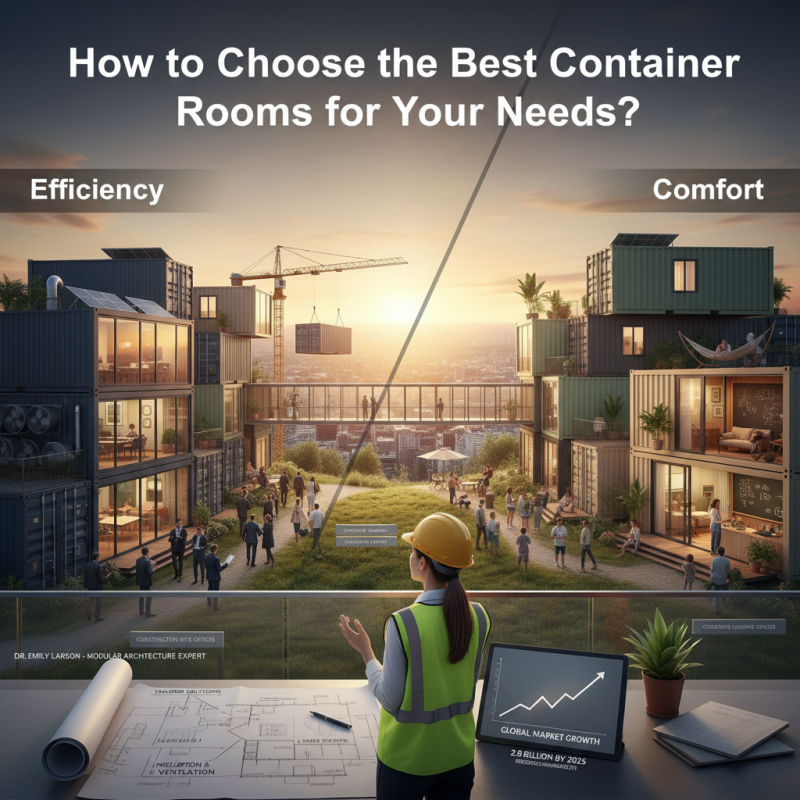
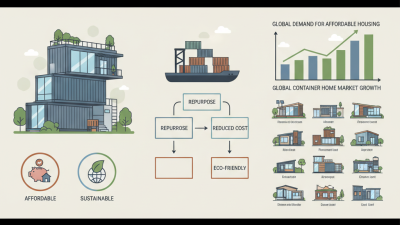
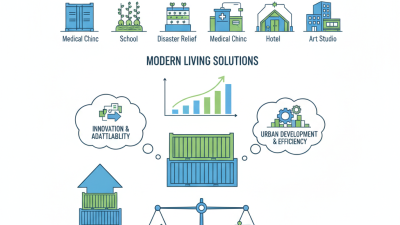
Choosing the right container rooms is crucial for both efficiency and comfort. The global market for container rooms is expected to grow significantly. According to a report by ResearchAndMarkets, the industry will reach $2.8 billion by 2025. This growth reflects an increased demand across various sectors, including construction and education.
Dr. Emily Larson, an expert in modular architecture, emphasizes the importance of tailored solutions. "Selecting container rooms should meet specific operational needs," she states. This perspective highlights that not all container rooms are created equal.
Many businesses overlook factors like insulation, ventilation, and customization. Simply focusing on cost can lead to poor choices. Each project demands a unique approach. Understanding your requirements is essential to making informed decisions about container rooms.
Understanding Your Space Requirements for Container Rooms
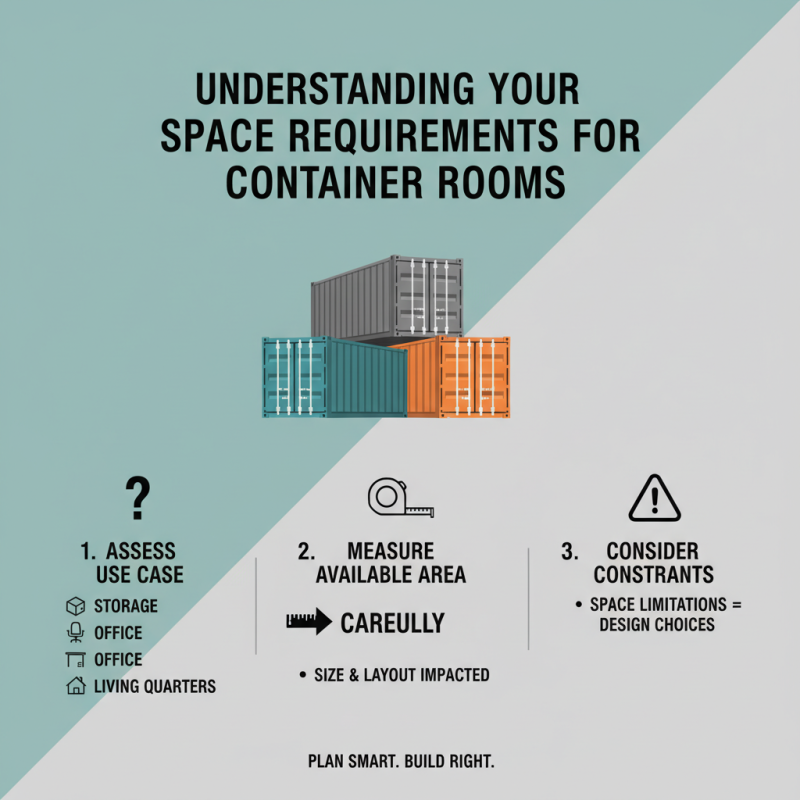
When selecting container rooms, understanding your space requirements is vital. Assess how you intend to use the space. Will it be for storage, an office, or living quarters? Each use case has different needs. Measure your available area carefully. Space constraints can impact the size and layout of your container room.
**Tip:** Consider the height and width of the container. A standard container might feel cramped if you plan to fit in furniture. Look for dimensions that provide comfort.
Think about accessibility too. If you expect frequent visits, a location close to paths or roads is essential. Evaluate how easy it will be to deliver and set up the container. A hard-to-reach spot can turn a good idea into a burden.
**Tip:** Keep in mind the potential for expansion. Will your needs grow in the future? Choose a container room that can adapt. Flexibility is crucial. You might not have everything figured out now. That's okay, but planning for growth can save headaches later.
Identifying the Purpose and Function of Your Container Room
Identifying the purpose and function of your container room is crucial for making the right choice. Container rooms can serve various needs, from offices to storage units. According to industry reports, the market for portable container structures is expected to grow by 15% annually. This growth highlights the increasing demand for flexible spaces.
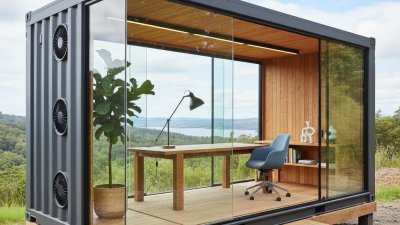
When choosing a container room, think about its intended use. Will it be a site office or a classroom? Understanding the specifics can guide your decision. If you're using it for storage, ensure it has security features. For offices, consider windows and insulation for comfort.
**Tip:** Think about future needs. You may need to adapt the space as your requirements change.
Not all container rooms are without flaws. Some may lack ventilation or adequate lighting. It’s vital to inspect the space before committing. Also, assess local regulations, as zoning laws can weigh heavily on your final decision.
**Tip:** Always visit a container before purchase. Check for damages and quality. This step can save you from costly mistakes later.
How to Choose the Best Container Rooms for Your Needs?
| Purpose |
Function |
Size (sq. ft.) |
Insulation |
Features |
| Office Space |
Workplace |
160 |
Yes |
Windows, Electrical Outlets |
| Storage |
Inventory Storage |
320 |
No |
Secure Locking Mechanism |
| Temporary Housing |
Living Quarters |
200 |
Yes |
Bathroom, Kitchenette |
| Workshop |
Crafting and Repairs |
240 |
Yes |
Tool Storage, Workbench |
| Event Space |
Gathering |
400 |
Yes |
Ample Lighting, Seating |
Evaluating Container Materials and Durability Options
When selecting container rooms, evaluating materials and durability is essential. Different materials offer various levels of strength and resistance to weather conditions. Steel containers are popular for their robustness. However, they can rust if not treated properly. On the other hand, aluminum containers are lightweight and resistant to corrosion, but they may not withstand heavy impacts as well as steel.
Tips: Always check the coating of the container. A good quality paint or sealant can significantly enhance durability. Look for containers that have been treated to resist rust and degradation. Consider the location where the container will be used. If it’s in a coastal area, prioritize materials that handle salt exposure better.
Consider thermal insulation as well. Poorly insulated containers can become excessively hot or cold. This can damage your belongings. Insulating materials can improve comfort and protect stored items. Your choice also impacts energy use if you install climate control systems. Evaluating these factors can prevent future issues and expenses.
Considering Portability and Transportation Factors
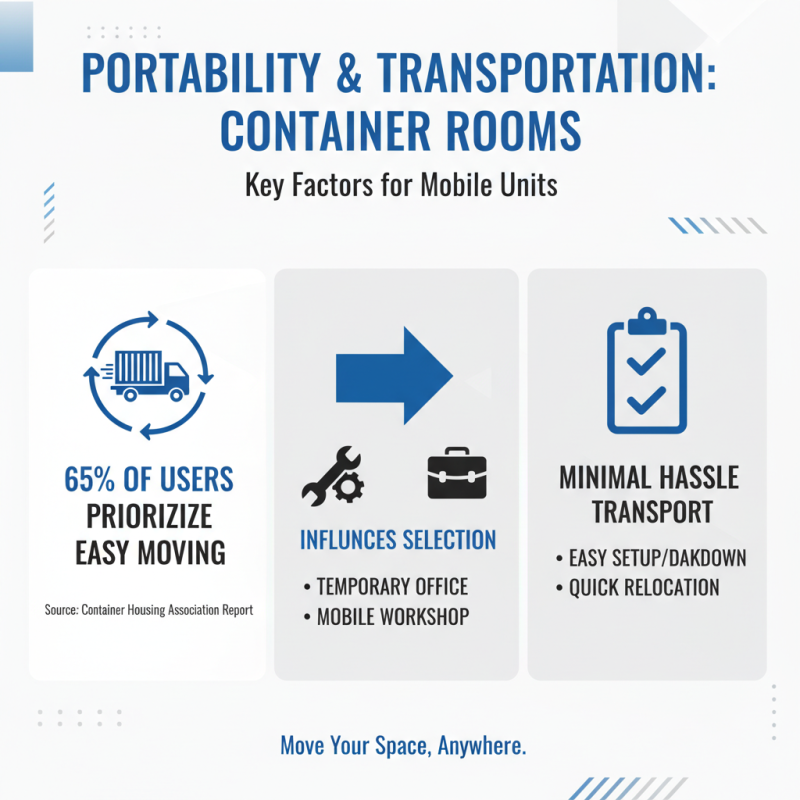
When considering container rooms, portability and transportation play a crucial role. According to a report from the Container Housing Association, nearly 65% of users prioritize ease of moving their units. This factor significantly influences their selection process. Whether you need a temporary office or a mobile workshop, the ability to transport your container room with minimal hassle is essential.
Transportation logistics can vary greatly. Some containers are designed for frequent relocation, while others are more stationary. A study by the Global Container Market indicates that cost-effective shipping options contribute to a rising interest in portable container solutions. Examine the dimensions and weight of the container, as these can impact transportation logistics. Not all companies provide clear details on moveability, leading to potential issues later.
Keep in mind, not every container room will meet your portability needs. Some designs are heavier, while others may require special permits for transport. Clarifying these aspects beforehand can save time and headaches. Think about how often you’ll need to relocate the unit. It's worth noting that not all portable solutions are equally effective.
Budgeting for Purchase, Installation, and Maintenance Costs
Budgeting for container rooms involves several factors. You need to consider purchase costs first. Prices vary widely based on size and condition. New units are more expensive. Used ones can offer savings, but may require repairs. Always assess what you truly need. Overbuying leads to unnecessary expenses.
Installation adds another layer to your budget. You might need a foundation, which impacts overall costs. Don’t forget permits and other regulatory requirements. These can inflate your budget significantly. Maintenance should also be factored in. Regular upkeep prevents larger repairs. Think about how often you will need to check on your container room. Small leaks can become big problems.
Reflect on your space needs as well. Are you using the container room for storage or as a workspace? Each use case may require different budgeting priorities. Maybe you could save by opting for a DIY approach. However, consider your skills. The wrong decision now may lead to regret later. Try to strike a balance between quality and cost.
Budget Breakdown for Container Room Acquisition
This bar chart illustrates the estimated budgeting breakdown for purchasing a container room, including costs for purchase, installation, and maintenance. Each category represents a key aspect to consider when budgeting for container room acquisition.