How to Choose the Best Modular Office Rooms for Your Workspace Needs
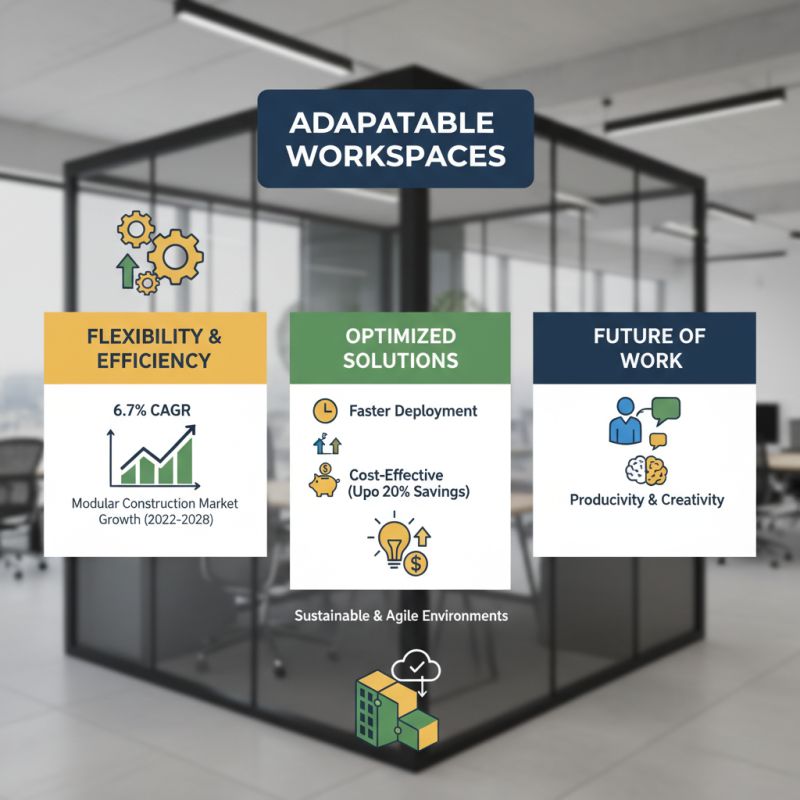
In today's ever-evolving workspace landscape, the demand for flexible and efficient office solutions has never been more critical. According to a recent report by the Global Modular Construction Market, the modular office rooms segment is projected to witness significant growth, with a compound annual growth rate (CAGR) of approximately 6.7% from 2022 to 2028. This surge is primarily driven by the need for adaptive work environments that foster collaboration while accommodating the diverse needs of a modern workforce.
As organizations increasingly embrace remote and hybrid work models, the importance of selecting the right modular office rooms becomes paramount. These versatile spaces offer numerous advantages, including faster deployment, cost-effectiveness, and sustainability, aligning with contemporary business objectives. A study by the Modular Building Institute highlights that companies can achieve up to 20% savings in construction costs by choosing modular solutions.
In light of these insights, businesses must carefully assess their specific requirements and explore how modular office rooms can enhance productivity, inspire creativity, and ensure that they are well-equipped to thrive in the future of work.
Understanding Modular Office Rooms: Definition and Benefits
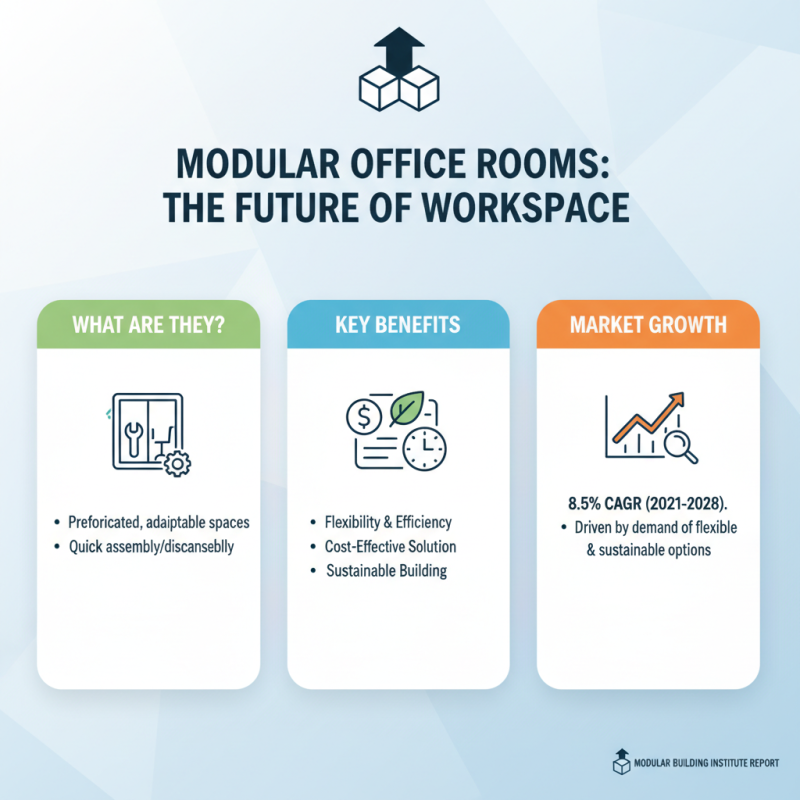
Modular office rooms are prefabricated spaces designed to accommodate diverse workspace needs while offering flexibility and efficiency. These structures can be quickly assembled and disassembled, making them an attractive option for businesses looking to adapt to changing demands. According to a report by the Modular Building Institute, the modular construction market is projected to grow at a compound annual growth rate (CAGR) of 8.5% from 2021 to 2028. This rise is largely attributed to the increasing need for cost-effective and sustainable building solutions.
One of the significant benefits of modular office rooms is their versatility. They can be customized to fit various functions, whether for open-plan workspaces, private offices, or collaborative areas. A study conducted by the International Facility Management Association highlighted that 70% of employees value a workspace that promotes collaboration, which modular designs can effectively facilitate by allowing companies to reconfigure spaces as needed. Additionally, with the ongoing focus on sustainability, modular offices are often built using eco-friendly materials and can be designed to optimize energy efficiency, aligning with many organizations' environmental goals.
Assessing Your Workspace Requirements: Size, Functionality, and Flexibility
When selecting modular office rooms for your workspace, assessing your requirements is crucial. The first step is to determine the size of the space you need. According to a report by the International Facility Management Association (IFMA), an ideal workspace should allocate approximately 150-250 square feet per employee to ensure comfort and productivity. This means if your team has ten employees, a modular office solution with a minimum of 1,500 square feet would be appropriate, allowing for collaborative areas and private workspaces.
Functionality is another essential aspect to consider. Modular offices should be designed to support your specific business needs, whether for open collaboration or private focus work. The research from the Global Workspace Survey indicated that 70% of employees prefer flexible spaces where they can choose their work environment, whether it be quiet areas for deep concentration or open zones for teamwork. Flexibility in design allows for easy reconfiguration, which is particularly valuable in today’s dynamic work culture, where the ability to adapt to changing team sizes and project requirements is a competitive advantage. By evaluating both size and functionality, companies can effectively create a workspace that fosters productivity and meets diverse employee needs.
Key Features to Consider: Noise Reduction, Aesthetics, and Accessibility
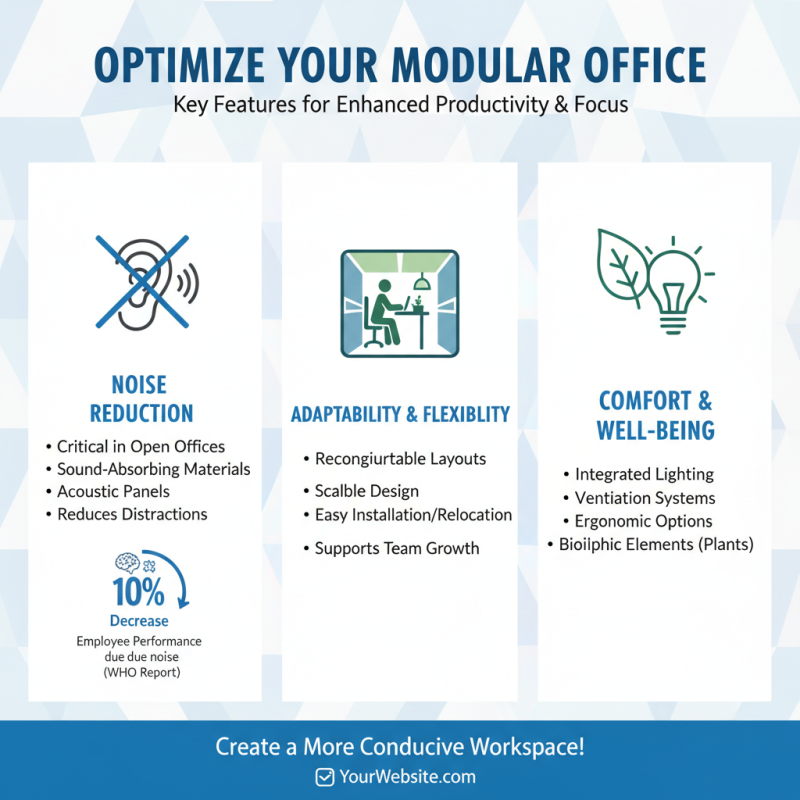
When selecting modular office rooms, it's essential to prioritize features that can significantly enhance the overall workspace environment. Noise reduction is a critical consideration, especially in open office layouts where distractions can hinder productivity. According to a report by the World Health Organization, excessive noise can lead to a 10% decrease in employee performance. Modular office designs that incorporate sound-absorbing materials and acoustic panels can help mitigate noise levels, creating a more conducive atmosphere for focused work.
Aesthetics also play a vital role in the effectiveness of modular office rooms. The visual appeal of an office space can impact employee morale and creativity. Research by the Interior Design Association shows that well-designed workspaces can improve productivity by up to 20%. Consider elements such as color schemes, natural light, and flexible layouts when choosing your modular office. An inviting and stylish environment not only enhances employee satisfaction but also leaves a positive impression on clients and visitors.
Tip: Prioritize modular office solutions that offer customizable designs to ensure that the aesthetics of your workspace reflect your company's brand identity. Additionally, ensure that the chosen space complies with accessibility standards, enabling all employees, including those with disabilities, to navigate and utilize the office effectively. This inclusivity promotes a diverse workforce and meets legal requirements, fostering a harmonious workplace culture.
Evaluating Material and Construction Quality: Cost vs. Durability Factors
When selecting modular office rooms, evaluating the material and construction quality is paramount. The choice of materials directly impacts not only the appearance and functionality of the workspace but also its long-term sustainability. High-quality materials such as steel frames, sturdy wall panels, and resilient flooring options often come with a higher upfront cost but offer significant benefits in terms of durability and maintenance. Choosing materials that withstand wear and tear can reduce long-term expenses associated with repairs and replacements, making the initial investment worthwhile.
Additionally, construction quality plays a critical role in the overall performance of modular office spaces. Well-constructed office rooms ensure proper insulation, soundproofing, and structural integrity, which contribute to a comfortable working environment. While it may be tempting to opt for lower-cost options, investing in well-built systems can yield better energy efficiency and longevity. It’s essential to balance the desire for cost savings with the need for robust and durable solutions that will perform effectively over time. Consideration of these factors will enhance overall workspace productivity and employee satisfaction.
How to Choose the Best Modular Office Rooms for Your Workspace Needs - Evaluating Material and Construction Quality: Cost vs. Durability Factors
| Material |
Construction Quality |
Durability (Years) |
Cost ($/sq ft) |
Environmental Impact |
| Steel |
High |
30+ |
30 |
Low |
| Wood |
Medium |
15-25 |
25 |
Medium |
| Aluminum |
High |
20-30 |
40 |
Low |
| Composite Panels |
Medium |
10-20 |
20 |
High |
| Vinyl |
Low |
5-10 |
15 |
High |
Best Practices for Installation and Future Scalability of Modular Spaces
When installing modular office rooms, it is essential to follow best practices to ensure a seamless integration into your existing workspace. Begin by conducting a thorough space analysis to identify both current and future needs. Assess the flow of work and how the modular units can enhance productivity while minimizing disruptions during installation. Proper planning involves considering electrical outlets, lighting, and climate control systems to ensure a comfortable and functional environment.
Consulting with professionals who specialize in modular installations can also help identify potential challenges and streamline the process.
Future scalability is another crucial aspect to consider in the selection and installation of modular office spaces. Choose designs that allow for easy reconfiguration or expansion as your business grows. This might involve selecting modular systems that can be combined or divided with minimal effort, ensuring that your workspace can adapt to changing demands. Implementing a flexible layout and using modular furniture can facilitate this adaptability, providing a dynamic work environment that can evolve alongside your organization.
By prioritizing these best practices, businesses can create a workspace that not only meets today's needs but also accommodates future growth without significant disruptions.