


Top

2026 How to Choose a Wired Push Button for Global Sourcing?

Global sourcing is no longer a simple price comparison. A Wired Push Button must survive repeated pressure, vibration, dust, moisture, and inconsistent installation practices. It also needs traceable specifications, stable supply, and clear compliance evidence. IEC 60947-5-1 provides an important reference for low-voltage control devices, while industry reports from MarketsandMarkets and Grand View Research continue to show strong automation investment worldwide. Yet market figures vary by definition, region, and product scope. That detail is easy to overlook.

For sourcing teams, experience matters. A button that feels solid in a sample box may fail after thousands of cycles on a factory panel. Contact rating, actuator travel, ingress protection, terminal design, panel thickness, and operating temperature deserve practical testing. ABB automation expert Sami Atiya has emphasized, “Industrial automation is about connecting people, processes, and technology.” His point applies here: the component must fit the complete control system, not merely meet a catalogue line. However, supplier claims should never replace independent verification.

This guide explains how to compare a Wired Push Button for global purchasing. It considers technical performance, certification documents, production capacity, inspection methods, packaging, and after-sales support. Some recommendations may seem conservative. They are. A lower unit price can become expensive when switches loosen, contacts oxidize, or replacement batches differ. Product selection is rarely perfect, so buyers should record assumptions, test failure points, and revisit them before approving a long-term supplier.
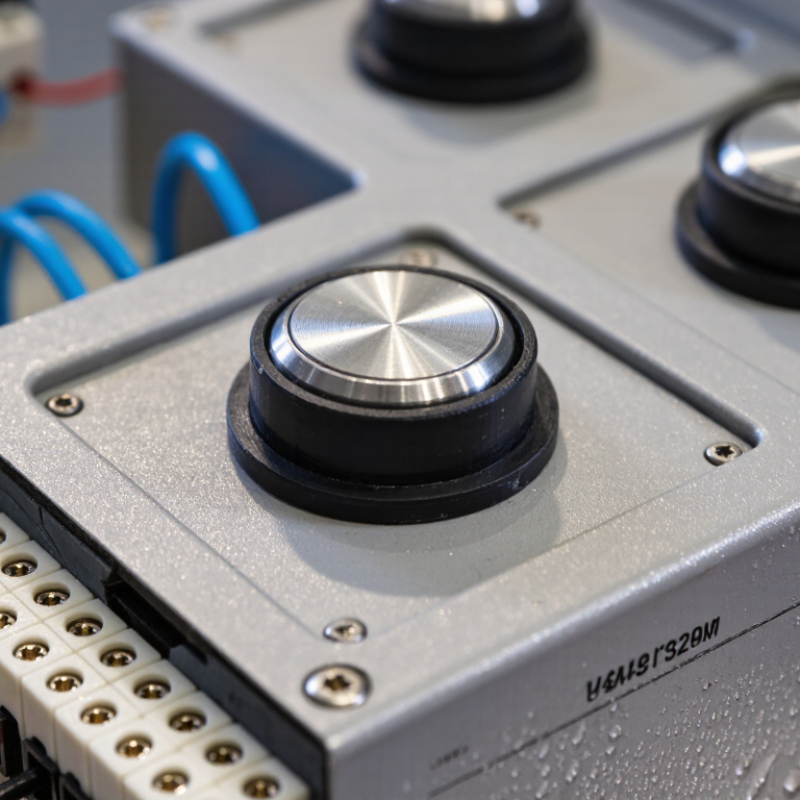
2026 How to Choose a Wired Push Button for Global Sourcing?

What Is a Wired Push Button and How Does It Work?

A wired push button is a manually operated switch that sends an electrical signal through fixed cables. Its structure is simple: an actuator, spring, contacts, terminals, and housing. Pressing the actuator changes the contact state. A normally open contact closes, while a normally closed contact opens. Releasing the button returns it through spring force.

The device does not usually power a machine directly. It sends a control signal to a relay, controller, or safety circuit. IEC 60947-5-1 defines requirements for low-voltage control switches, including contact performance and testing. The International Federation of Robotics reported 541,302 industrial robots installed globally in 2023. More automated equipment means more demand for dependable operator interfaces. Small components still matter.

For global sourcing, inspect contact ratings, insulation voltage, IP protection, terminal design, and mechanical life. A 22 mm mounting hole may appear standard, but panel thickness and terminal clearance can differ. In field checks, loose terminals often create more trouble than the button mechanism. Datasheets help. Samples help more. Push force also deserves testing, especially when operators wear gloves. I would not choose only by unit price. A cheaper button may require more replacements, wiring labor, or downtime. That calculation is easy to miss. Supplier test records should match the delivered batch, not only a showroom sample.

2026 How to Choose a Wired Push Button for Global Sourcing? - What Is a Wired Push Button and How Does It Work?

A wired push button is a manually operated switching device that opens or closes an electrical circuit through mechanical movement. When the button is pressed, internal contacts change state; when it is released, a spring or other return mechanism restores the original state unless the device is designed as a latching type.

Sourcing Dimension Typical Data or Specification How It Works or What to Check Global Sourcing Consideration
Operating principle Momentary or maintained/latching contact action Momentary buttons return to their normal position after release; maintained buttons remain in the selected state until operated again. Specify the required circuit behavior in writing and confirm it with a functional sample.
Contact configuration Normally open (NO), normally closed (NC), or changeover contact NO contacts close when pressed. NC contacts open when pressed. Changeover contacts transfer between two circuits. Check the wiring diagram, terminal markings, and continuity in both released and pressed states.
Rated voltage Common product ratings include extra-low-voltage DC and low-voltage AC applications; the exact rating is product-specific. The voltage rating indicates the maximum permitted system voltage under stated operating conditions. Match the rating to the actual circuit, including voltage tolerance, switching type, and load category.
Rated current Often specified from signal-level loads to several amperes, depending on contact material and switch construction. Current capacity depends on whether the load is resistive, inductive, capacitive, or motor-related. Do not use a resistive-load rating for a motor or relay load without checking the manufacturer’s load table.
Electrical life Common catalogs separate electrical life from mechanical life; electrical life may range from tens of thousands to hundreds of thousands of operations. Electrical arcing and load type can shorten contact life even when the mechanism itself remains functional. Request test conditions, load type, switching frequency, and end-of-life criteria rather than relying on one life number.
Mechanical life Many industrial push-button mechanisms are rated from approximately 100,000 to 1,000,000 mechanical operations. Mechanical life measures actuation durability without necessarily applying the full electrical load. Compare test force, travel, operating speed, and environmental conditions before comparing life figures.
Actuator type Flush, raised, mushroom, illuminated, guarded, key-operated, or emergency-stop style The actuator shape controls ergonomics, accidental-operation risk, visibility, and reset behavior. Choose an actuator that matches the machine risk assessment, operator gloves, and available panel space.
Illumination Non-illuminated or illuminated using an integrated lamp or LED module Illumination provides status or location feedback and requires a separate light-source voltage specification. Confirm light color, voltage, polarity, brightness, replacement method, and whether the light circuit is electrically isolated.
Panel cutout and mounting Common panel cutout families include approximately 16 mm, 22 mm, and 30 mm, but dimensions are not interchangeable. The threaded body, nut, gasket, and anti-rotation feature secure the button to the panel. Provide the exact cutout diameter, panel thickness range, mounting depth, and clearance behind the panel.
Terminal and wire connection Solder lugs, screw terminals, quick-connect tabs, PCB pins, or factory-attached wire leads The connection style determines assembly method, serviceability, wire routing, and vibration resistance. For pre-wired products, specify wire length, conductor size, insulation type, stripping length, terminal labels, and connector requirements.
Ingress protection Common claims range from basic protection to IP65, IP67, or higher for suitable sealed designs. The first IP digit relates to solid-particle protection; the second relates to water protection under defined test conditions. Verify whether the rating applies to the front panel only, the complete assembly, or the button plus connector and cable.
Operating temperature Many industrial products specify a range near −25°C to +55°C or wider, subject to the specific design. Temperature affects contact resistance, seal flexibility, actuator force, plastics, and cable insulation. Use the complete assembly’s temperature range, including the wire and connector, not only the switch body.
Actuation force and travel Force and travel vary considerably by actuator, contact system, and application; supplier datasheets should provide the exact values. Force affects user comfort and accidental activation; travel affects tactile feedback and installation clearance. Request force-travel curves or samples when the button will be used frequently or with protective gloves.
Material and corrosion resistance Typical constructions use engineering plastics, plated metals, stainless steel, elastomer seals, or combinations of these materials. Material selection influences strength, chemical resistance, appearance, temperature performance, and corrosion behavior. Define exposure to salt spray, cleaning chemicals, oils, UV light, and humidity before approving materials.
Compliance and documentation Relevant requirements may include electrical safety, electromagnetic compatibility, environmental restrictions, and regional market rules. Compliance depends on the product, end use, voltage, installation method, and destination market. Request a current datasheet, wiring diagram, declaration or test report where applicable, material information, and change-control policy.
Packaging and international shipping Small switches are commonly supplied in bulk, trays, bags, or individually protected packaging. Packaging must protect actuators, seals, terminals, and pre-attached wires from bending, moisture, and abrasion. Confirm carton quantity, net and gross weight, packaging materials, barcode or label format, and export documentation.
Quality inspection points Visual inspection, dimensional inspection, continuity testing, insulation testing where applicable, and functional cycling Inspection verifies that the supplied batch matches the approved sample and electrical specification. Agree on an inspection plan, sampling level, acceptance criteria, traceability information, and corrective-action process before production.
Selection rule: Choose the wired push button only after confirming contact logic, electrical load, panel dimensions, environmental protection, cable configuration, operating life, and destination-market documentation. Product ratings are application-specific and should always be verified against the latest supplier datasheet and test conditions.

Which Electrical and Mechanical Specifications Matter Most?

2026 How to Choose a Wired Push Button for Global Sourcing?

Which Electrical and Mechanical Specifications Matter Most?

A wired push button should be selected from the circuit backward, not from appearance forward. Define voltage, current, load type, and switching frequency before comparing suppliers. A 5 A rating can mislead when the load is inductive. Check both AC and DC ratings, because they are rarely interchangeable. Contact arrangement also matters, including normally open, normally closed, and changeover options.

The 2024 World Robotics report recorded 541,302 industrial robot installations worldwide in 2023. This growth increases demand for reliable operator controls near machines. For these environments, verify insulation resistance, dielectric strength, electrical life, and terminal protection. IEC 60947-5-1 provides a useful reference for low-voltage control devices. IEC 60529 should guide the required IP rating. IP65 may suit dust and water jets, but not every washdown condition. Test evidence matters more than a printed suffix.

Mechanical details often decide whether global sourcing succeeds. Confirm panel cutout dimensions, mounting depth, actuator travel, operating force, and guard clearance. A button that feels comfortable on a workbench may fatigue operators after thousands of cycles. Check vibration, shock, temperature range, and mechanical endurance. The manufacturer should provide drawings, tolerance values, and test conditions. “Fits the hole” is not enough.

Ask for samples from the intended production process. That shortcut is tempting. It is also wrong. Contact bounce, loose terminals, and inconsistent actuation may appear only during repeated testing. I still recheck tolerance stacks, especially when enclosures and buttons come from different suppliers. A complete specification sheet reduces surprises, but it cannot replace application testing.

How to Match Button Types with Global Application Requirements?

Choosing a wired push button for global sourcing starts with the application, not the catalog image. A factory stop circuit may need a maintained button, while a control panel often needs momentary action. Confirm whether the circuit requires normally open or normally closed contacts. Check voltage, current, switching frequency, and load type. A button rated for lighting may fail under motor-related loads.

The installation environment matters just as much. Outdoor equipment may need sealed protection against rain and dust. A food-processing panel may require smooth surfaces and careful cleaning resistance. Measure the panel cutout, mounting depth, terminal space, and wire exit direction. Small details matter. In one project, I underestimated rear clearance by several millimeters. The button fitted the panel, but the wiring bent too sharply. That mistake delayed testing.

For global applications, request clear datasheets, material information, inspection records, and representative samples. Verify electrical ratings under the actual operating conditions, not only the maximum printed value. Ask about contact materials, operating life, cable insulation, connector options, and temperature limits. A supplier should explain production controls and provide consistent traceability. Regional preferences can also affect terminal styles and documentation. Translation errors remain a practical risk. Keep critical specifications in a controlled table, then compare samples against it. A low unit price means little if installation labor, replacement rates, or requalification costs increase. Reliability is built through evidence, but even careful sourcing decisions deserve another review before mass production.

How to Verify Safety, Compliance, Quality, and Supplier Reliability?

2026 How to Choose a Wired Push Button for Global Sourcing?

A wired push button must match the equipment, market, and operating environment. Check voltage, current rating, contact material, insulation, wire size, and switching life. Confirm whether the button needs sealed protection for dust, water, oil, or outdoor use. Small details matter. A loose terminal can stop an entire control panel.

Request safety test reports, material declarations, and traceable production records. Verify that documents match the exact model, wire configuration, and revision. Requirements differ across countries, so confirm applicable electrical, chemical, and environmental rules before ordering. Do not accept a generic certificate without checking its scope. A certificate can look impressive and still cover another product.

Quality verification should include sample testing under realistic loads. Inspect wire crimping, solder joints, strain relief, housing strength, and button response. Ask for inspection standards, defect records, corrective actions, and batch identification. Supplier reliability also requires more than a factory tour. Review capacity, change-control procedures, delivery history, and contingency planning. Keep a sealed reference sample for future comparison. It helps expose silent material changes. I have found that even careful checks can miss inconsistent cable stripping or uneven tactile force. That is why incoming inspection should remain active after approval, not only during the first purchase.

How to Compare Costs, Customization, Packaging, and Logistics?

Choosing a wired push button for global sourcing requires more than comparing unit prices. I examine the landed cost: product price, tooling, testing, packing, freight, insurance, and import charges. A button priced at $0.18 may become expensive after a larger carton increases dimensional weight. Ask suppliers for a cost sheet with identical quantities and delivery terms. Otherwise, comparisons become misleading.

Customization also changes the calculation. Confirm wire length, terminal type, button color, contact rating, mounting size, and operating force. Small changes can affect molds, minimum order quantities, and production time. Request a pre-production sample. It is cheaper than discovering a loose terminal after shipment. I have seen buyers approve drawings too quickly. That mistake is avoidable, but not always.

Packaging deserves practical testing. Use inner trays or separators when buttons can scratch or press each other during transport. Check carton strength, moisture protection, labels, and recyclable materials. Measure the packed carton, not just the product. For logistics, compare sea, air, rail, and courier options against demand urgency. Confirm carton quantity, gross weight, destination documents, and delivery schedule. Ask for inspection records and test reports suited to the target market. Requirements can vary by region. A supplier’s confident answer is not evidence. Written specifications, sample approval, and batch inspection create a more reliable purchasing decision. Yet even careful plans need review when copper prices, freight rates, or seasonal capacity change.

2026 How to Choose a Wired Push Button for Global Sourcing?

Cost comparison by product configuration, customization, packaging, and logistics for a representative 1,000-unit sourcing order.

The benchmark shows estimated landed cost per unit in USD. Standard models generally provide the lowest cost, while custom labeling, modified wiring, retail-ready packaging, and faster logistics increase the total sourcing budget. Actual pricing depends on specifications, order quantity, destination, certifications, and shipping terms.