


How to Buy Converted Shipping Containers?
Buying converted shipping containers looks simple until the first inspection reveals hidden costs. A painted steel box can become an office, workshop, café, or storage room. However, its original cargo purpose does not guarantee building safety. The UNCTAD Review of Maritime Transport reports that more than 80% of global merchandise trade moves by sea. This scale creates a large supply of used containers, but quality varies sharply between units.
This guide explains how to buy converted shipping containers with practical checks and reliable evidence. Start by confirming dimensions, manufacture year, steel condition, and modification history. Inspect the roof, corner posts, floor, doors, welds, and drainage points. Ask for photographs before conversion, invoices, material specifications, and electrical inspection records. The International Convention for Safe Containers, or CSC, mainly concerns transport safety. A container modified for permanent use may require separate local approvals and structural assessment. Do not assume a valid CSC plate proves residential suitability.
Industry pricing and availability should also be compared carefully. Container xChange market reports can help buyers understand regional supply, equipment availability, and price movement. Yet online prices often exclude delivery, crane unloading, foundations, insulation, permits, and utility connections. Those extras can change the budget completely. Measure the access route. Check the turning radius. A perfect unit is useless if a delivery truck cannot reach the site.
Look closely. Ask better questions.
Some decisions remain imperfect. Used steel may contain dents, corrosion, or previous repairs. A low purchase price can hide expensive remediation. When uncertainty remains, an independent surveyor, engineer, or qualified electrician is worth the fee. This approach supports safer purchasing, clearer costs, and a more dependable investment in converted shipping containers.
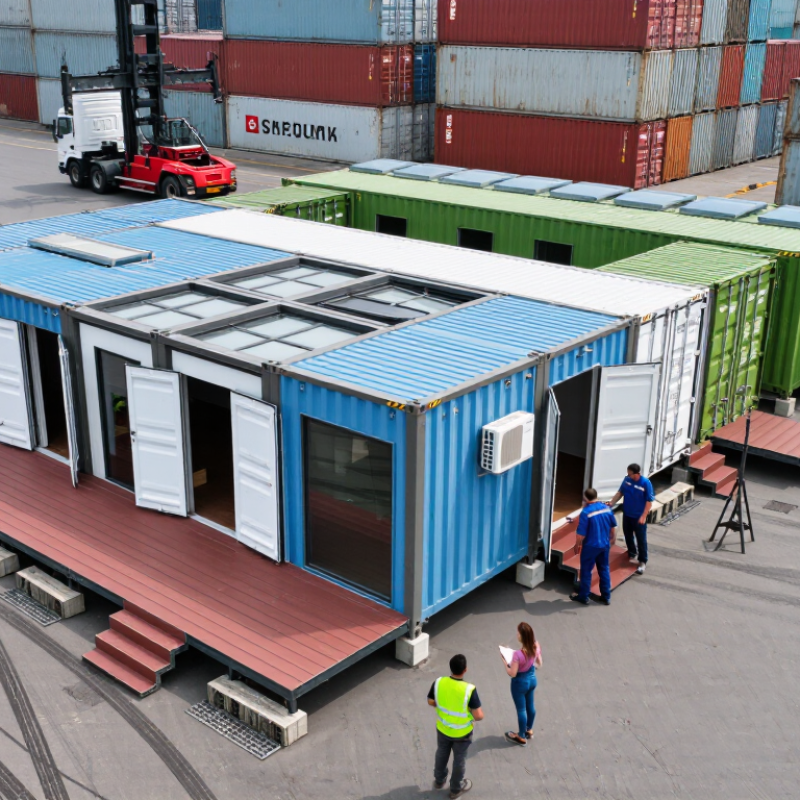
Specify Use and Size: ISO 668’s 20-ft (6.058 m) and 40-ft (12.192 m) Units
When buying a converted shipping container, define its daily use before choosing a length. A site office may need desks, ventilation, and cable routes. A storage unit may need shelving, lighting, and weather seals. ISO 668 gives the familiar 20-foot unit an external length of 6.058 metres. The 40-foot unit measures 12.192 metres. Both are about 2.438 metres wide, while height options can differ. Measure the finished container, not only the steel shell.
The 20-foot format suits narrow access, small plots, and limited contents. It is easier to position with a suitable lifting plan. The 40-foot format offers nearly twice the floor length, but delivery needs more turning space and stronger ground preparation. I have seen buyers focus on floor area, then struggle with door swing and internal partitions. Leave service clearance around equipment. Check the route, lifting reach, and overhead cables before ordering.
Ask for a measured drawing showing internal dimensions after insulation, lining, and electrical work. Inspect corner posts, roof, floor condition, door seals, welds, and drainage points. Confirm that the conversion does not overload the structure. A cut-out window may need reinforcing. Insulation also reduces usable width, sometimes more than expected. Request photos of hidden layers and test every installed system. Specifications can be imperfect; a site measurement is safer.
How to Buy Converted Shipping Containers? - Specify Use and Size: ISO 668’s 20-ft (6.058 m) and 40-ft (12.192 m) Units
| Specification | ISO 668 20-ft Unit | ISO 668 40-ft Unit | Buying Consideration for Conversion |
|---|---|---|---|
| Common designation | 20-foot general-purpose container | 40-foot general-purpose container | Select the nominal length according to the required floor area, transport route, and installation space. |
| Nominal external length | 6.058 m (20 ft) | 12.192 m (40 ft) | Allow additional clearance for lifting, truck access, doors, drainage, and maintenance. |
| External width | 2.438 m (8 ft) | 2.438 m (8 ft) | The standard width is suitable for road transport, but local transport regulations may limit the permitted load width. |
| External height | 2.591 m (8 ft 6 in), standard height | 2.591 m (8 ft 6 in), standard height | Check whether the site requires a standard-height unit or a high-cube alternative. High-cube units are approximately 2.896 m high. |
| Typical internal length | Approximately 5.90 m | Approximately 12.03 m | Actual internal dimensions vary by manufacturer, corner construction, flooring, and wall lining. |
| Typical internal width | Approximately 2.35 m | Approximately 2.35 m | Measure the finished internal width after insulation, framing, electrical work, or sanitary fittings are installed. |
| Typical internal height | Approximately 2.39 m | Approximately 2.39 m | Ceiling services and insulation reduce usable headroom; confirm the final finished height before ordering. |
| Approximate internal floor area | About 13.9 m² | About 28.3 m² | Useful for estimating office, workshop, storage, retail, accommodation, or plant-room layouts. |
| Approximate internal volume | About 33 m³ | About 67.7 m³ | Usable volume will be lower after insulation, partitions, equipment, shelving, and mechanical systems are added. |
| Typical door opening | Approximately 2.34 m wide × 2.28 m high | Approximately 2.34 m wide × 2.28 m high | Verify the opening dimensions if the conversion includes machinery, vehicles, wide furniture, or prefabricated equipment. |
| Typical maximum gross mass | Up to approximately 30,480 kg, subject to the unit’s rating plate | Up to approximately 30,480 kg, subject to the unit’s rating plate | Conversion work adds permanent weight. Calculate payload after adding insulation, windows, doors, tanks, batteries, and fixtures. |
| Typical tare mass | Approximately 2,200–2,400 kg | Approximately 3,700–4,000 kg | Exact tare mass depends on steel thickness, flooring, doors, fittings, and the original unit configuration. |
| Best suited for | Compact workshops, site offices, kiosks, storage rooms, security rooms, and small utility spaces | Large workshops, classrooms, accommodation modules, retail spaces, offices, and multi-room layouts | Choose based on the intended function rather than external length alone. |
| Transport and placement | Generally easier to deliver and position on restricted sites | Requires a longer access route and a larger turning, lifting, or crane setup area | Confirm road access, overhead clearance, ground bearing capacity, and lifting requirements before purchase. |
| Structural inspection points | Check corner posts, corner castings, bottom rails, cross-members, roof, and door frame | Check corner posts, corner castings, bottom rails, cross-members, roof, and door frame | Reject units with severe twisting, major corrosion, compromised corner castings, or structural repairs without documentation. |
| Conversion checks before purchase | Confirm dimensions, condition, age, previous cargo use, floor treatment, doors, ventilation, drainage, and certification requirements. | Request current photographs, the identification plate, repair history, a weight estimate, and a drawing showing all proposed openings. | |
| Most important specification to provide | Intended use, required internal clear dimensions, number and position of openings, insulation target, electrical load, plumbing needs, and delivery location | A precise use-and-size brief reduces redesign, transport problems, and unexpected structural reinforcement costs. | |
| Dimensions marked as typical are approximate because finished internal dimensions and tare masses vary by construction details and conversion work. Always verify the container’s identification plate, measured dimensions, structural condition, and local transport or building requirements before purchase. | |||
Related Posts
-

7 Best Shipping Container Buildings for Global Buyers
-

How to Choose Converted Containers for Your Needs?
-
What Are the Top Types of Modular Containers?
-
Top Container Home Office Ideas for Your Modern Workspace?
-

10 Best Cargo Container House Designs for Modern Living?
-
What is a Conex Container Home and Why Are They Popular for Affordable Living