


The global bathroom market is moving toward cleaner layouts, durable fittings, and easier maintenance. Within this shift, the Hinged Shower Screen remains a practical choice for hotels, residential projects, and premium renovation work. Its appeal is visible: a clear glass panel, a compact hinge line, and a door that opens smoothly without bulky framing.
Industry reports support this wider trend, although they rarely measure hinged screens as a separate product category. Grand View Research and Fortune Business Insights have reported steady growth across global bathroom fixtures, sanitaryware, and home improvement markets. Their findings point to stronger renovation demand, urban housing development, and rising expectations for product quality. Mordor Intelligence also identifies commercial construction and hospitality investment as important drivers for bathroom fixture sales. The data is useful, but not perfect. Product definitions vary between reports, regions, and research methods.
For global buyers, supplier evaluation must go beyond attractive photographs. A reliable manufacturer should explain glass thickness, edge treatment, hinge material, seal performance, packaging design, and installation tolerances. Tempered safety glass, stainless steel hardware, and corrosion-resistant finishes are practical indicators. Buyers should also check whether products meet relevant market requirements, such as EN 14428 or applicable local safety-glazing standards. Certification claims need verification.
Small details matter. A poorly aligned hinge can leave water on the bathroom floor. Weak packaging can damage an otherwise excellent screen before installation. This guide examines leading Hinged Shower Screen manufacturers through product quality, customization capability, factory experience, documentation, and export reliability. The goal is not to praise every supplier. It is to help buyers ask better questions.
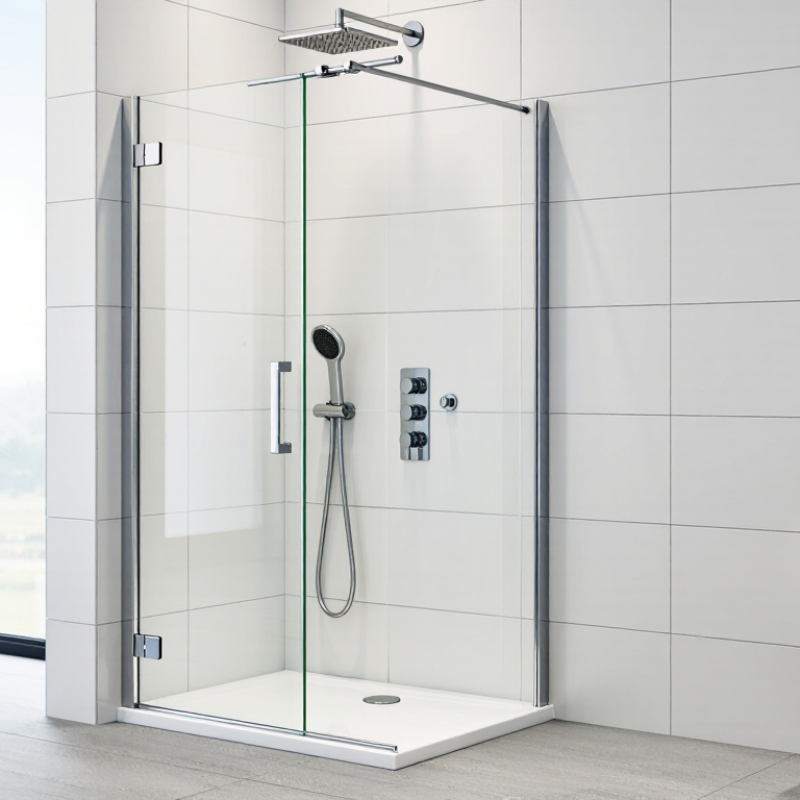
Hinged shower screens combine a fixed glass panel, hinges, seals, and a swinging door. Their performance depends on alignment, wall strength, and accurate installation. A 6–10 mm tempered glass panel is common in residential projects. Thicker glass feels rigid, but it also increases hinge loads.
Common types include single-door, double-door, corner, and fixed-panel configurations. In compact bathrooms, an inward-opening door can protect circulation space. Outward clearance still matters for safe access. Frameless designs create a lighter visual effect, while framed systems usually offer stronger sealing. The 2024 U.S. Bathroom Trends Study by Houzz reported that 33% of renovating homeowners enlarged their showers, showing why layout flexibility matters to global buyers.
Key features include adjustable hinges, replaceable seals, wall profiles, anti-limescale coatings, and precise drainage gaps. Hinges should match the glass thickness and door weight. Do not trust appearance alone. EN 14428 covers shower enclosure requirements, while ANSI Z97.1 addresses safety glazing performance. Buyers should request test records, installation tolerances, spare-part availability, and corrosion-resistance details. The Global Glass-Filled Polymer Market report by Grand View Research highlights ongoing demand for durable, low-maintenance materials, though shower-screen durability also depends heavily on hardware quality. One overlooked detail is cleaning access around hinge covers. Small gaps collect soap quickly. Even premium glass fails when installation is rushed.
Evaluating hinged shower screen manufacturers requires more than comparing prices. Examine their factory experience, engineering capacity, and quality control records. Ask for glass specifications, hinge load ratings, seal materials, and installation drawings. A reliable manufacturer should explain how each component performs in humid bathrooms. Request a physical sample when possible. Check whether the door opens smoothly and closes without scraping the tray.
Production evidence matters. Review inspection steps for glass edges, drilling accuracy, surface defects, and packaging strength. Ask how the manufacturer tests hinges through repeated opening cycles. Confirm available sizes, tolerance control, replacement parts, and realistic lead times. Clear answers usually indicate stronger internal management. A polished catalog can still hide weak production control. That detail deserves attention.
Tips: Compare two or three samples under the same conditions. Measure the glass, frame, hinge position, and door gap. Check cartons for corner protection and moisture resistance. Request recent quality records, not only certificates. Also, test communication speed and technical accuracy. Slow replies may create installation problems later. No supplier gets every detail right. The goal is dependable correction, not perfect promises. A written warranty, clear claims process, and practical installation guidance can reveal how responsibly a manufacturer supports global buyers.
For global buyers, a hinged shower screen must meet the safety-glazing requirements of its destination market. These rules can differ, so confirm the applicable standard before approving a sample. Ask for test reports that identify the glass type, thickness, and tested product configuration. A certificate without matching product details offers limited reassurance.
Paperwork matters.
Quality checks should cover more than the glass. Inspect hinge alignment, smooth opening, secure fixings, and resistance to corrosion in humid bathrooms. Ask how the manufacturer checks dimensions and tests hinges over repeated opening cycles. ISO 9001 can indicate a documented quality-management system, but it does not certify the shower screen itself. Fit matters too. Installation guidance, replacement-part availability, and protective packaging can affect performance after shipment. Even careful checks cannot prevent every installation error, so clear instructions are essential.
Tips: Request current, traceable test documents for the exact model. Compare sample measurements with drawings, and check that hardware finishes match the order. Ask who handles inspection failures; answers may reveal gaps in the process.
For global buyers, a top hinged shower screen manufacturer should explain how its materials perform in daily use, not just list specifications. Tempered glass is common, while thickness, edge finishing, and coating options affect weight, cleaning, and handling. Clear glass keeps a compact bathroom feeling open; patterned glass can offer more privacy. Small details matter.
Hinges need to suit the panel’s weight and the opening direction. Stainless steel hardware is widely used, but buyers should confirm the grade, finish, and corrosion-testing method. A polished sample may look convincing under showroom lights. Ask to inspect hardware after repeated opening tests, too. One limitation: coatings can reduce water marks, but they do not eliminate cleaning.
Customization may include panel dimensions, handle styles, glass finishes, and left- or right-hand installation. Reliable suppliers typically review drawings and check wall conditions before confirming production. Buyers should request dimensional tolerances, packaging details, and a sample approval process. These steps can expose mismatched expectations early.
Production capacity is more than a monthly output figure. Check whether the factory can track glass cutting, tempering, assembly, and final inspection by order. Ask how it manages replacement parts and packaging for long-distance shipping. Lead times can change when specifications shift; that part is sometimes overlooked. A clear production schedule is useful, but verify it against recent orders and inspection records.
| Manufacturer Profile | Common Glass Options | Frame and Hardware | Customization Scope | Quality and Compliance Checks | Production and Export Considerations | Best Fit for Buyers |
|---|---|---|---|---|---|---|
| Standard-range production specialist | Typically offers 6 mm and 8 mm toughened safety glass. Clear glass is common; patterned, tinted, or low-iron options depend on the supplier. | Commonly uses framed or semi-frameless designs with aluminum profiles and stainless-steel or zinc-alloy hardware options. | Usually supports standard widths and heights, several finish choices, and limited made-to-measure sizing. | Ask for applicable safety-glass test reports and confirm whether the finished enclosure has been checked for water leakage, alignment, and door operation. | Standardized designs can simplify repeat orders. Confirm carton protection, pallet requirements, lead time, and export documentation before placing an order. | Projects prioritizing commonly specified sizes, straightforward installation, and cost control. |
| Made-to-measure enclosure fabricator | Often quotes 6 mm or 8 mm toughened glass; available thicknesses and glass treatments vary by design and local requirements. | May offer framed, semi-frameless, or frameless configurations, with hardware finishes selected from the supplier’s available range. | Can typically assess non-standard widths, heights, and layouts from drawings or site measurements. Confirm allowable tolerances and out-of-square adjustments. | Request dimensioned production drawings for approval. Verify glass safety documentation, hardware specifications, and the supplier’s measurement and inspection process. | Custom orders require confirmed measurements and drawing sign-off. Discuss replacement-part availability and packing methods for made-to-order glass. | Renovations and projects with unusual openings or specific layout requirements. |
| Premium frameless-glass specialist | Commonly offers 8 mm glass, with 10 mm available for some systems. Options may include clear, low-iron, tinted, or surface-treated glass. | Uses heavier-duty hinges and precision-fitted hardware; finishes and compatible glass thicknesses are system-specific. | May support bespoke panel dimensions, handle choices, hinge positions, and selected glass treatments, subject to structural and installation limits. | Check the rated glass thickness and door dimensions for each hinge system. Confirm safety-glass standards, installation clearances, and required wall support. | Large glass panels need careful handling and protective packaging. Ask about crate design, breakage claims, installation guidance, and spare hardware. | Higher-specification residential or hospitality projects seeking a minimal-frame appearance. |
| Volume-oriented OEM supplier | Usually focuses on repeatable glass specifications and established product configurations; thickness and decorative choices depend on the approved product range. | May provide coordinated profiles, hinges, handles, and seals for private-label or project orders. | Can support packaging, labeling, and selected product modifications. Confirm tooling requirements, minimum order quantities, and limits on design changes. | Agree on approved samples, inspection criteria, labeling, and document requirements before production. Verify that compliance documents apply to the exact model and market. | Evaluate production planning, batch consistency, packaging standards, shipping terms, and the supplier’s process for handling defects or transit damage. | Distributors, retailers, and contractors ordering repeat batches or private-label products. |
| Project-focused architectural supplier | May quote multiple glass thicknesses and finishes to match project specifications; availability is confirmed per product schedule. | Can coordinate glass, profiles, hinges, and accessories across a defined project range, subject to system compatibility. | Often reviews project drawings, opening schedules, and finish schedules. Confirm design responsibility, measurement ownership, and change-control procedures. | Request model-specific test documentation and a clear record of approved specifications. Check local building and safety requirements for the destination market. | Project delivery may require phased production, consolidated packing, traceable labeling, and agreed delivery milestones. | Multi-unit residential, commercial, and hospitality projects with documented specifications. |
Buyer note: These are general manufacturer capability profiles, not named-company ratings or guaranteed specifications. Glass thickness, finishes, customization limits, certifications, production capacity, and lead times vary by model and supplier. Obtain current technical documents and a written quotation for the exact destination market and project.
For international buyers, a dependable hinged shower screen order begins with a clear specification. Send the manufacturer opening measurements, glass thickness, hinge side, handle position, and finish requirements. A simple marked-up drawing can prevent costly misunderstandings. Ask for a sample or production photos before approving a large order.
Details matter.
Confirm how the glass and hardware will be packed, and whether the quotation includes export packaging, freight, and insurance. A neat quotation can still hide a vague detail.
Shipping plans should account for transit time, delivery location, and customs paperwork. Request the packing dimensions and gross weight early; they affect freight quotes and warehouse handling. Agree on inspection steps and shipment updates in writing.
After delivery, keep photos of any damaged cartons and record the order number and affected parts. For after-sales support, ask who handles replacement hinges, seals, or panels, and what evidence they need. Replies may take longer across time zones.
That is worth planning for.
Even careful checks cannot remove every risk, so leave time in the project schedule for clarification or replacement parts.
| Cookie | Duration | Description |
|---|---|---|
| cookielawinfo-checkbox-analytics | 11 months | This cookie is set by GDPR Cookie Consent plugin. The cookie is used to store the user consent for the cookies in the category "Analytics". |
| cookielawinfo-checkbox-functional | 11 months | The cookie is set by GDPR cookie consent to record the user consent for the cookies in the category "Functional". |
| cookielawinfo-checkbox-necessary | 11 months | This cookie is set by GDPR Cookie Consent plugin. The cookies is used to store the user consent for the cookies in the category "Necessary". |
| cookielawinfo-checkbox-others | 11 months | This cookie is set by GDPR Cookie Consent plugin. The cookie is used to store the user consent for the cookies in the category "Other. |
| cookielawinfo-checkbox-performance | 11 months | This cookie is set by GDPR Cookie Consent plugin. The cookie is used to store the user consent for the cookies in the category "Performance". |
| viewed_cookie_policy | 11 months | The cookie is set by the GDPR Cookie Consent plugin and is used to store whether or not user has consented to the use of cookies. It does not store any personal data. |