


Top

2026 Best Teardrop Pacer Flags for Global Buyers

Choosing the right Teardrop Pacer Flags in 2026 requires more than comparing colors and prices. Global buyers need visibility, stable construction, and dependable supplier communication. A flag may look impressive online, yet feel thin, fade quickly, or twist badly in changing wind. Small details matter.

Maya Chen, an independent event-display consultant with experience in portable branding systems, says, “A good flag attracts attention, but a reliable flag keeps the message readable.” Her observation is practical. Buyers should examine fabric weight, dye quality, pole flexibility, base options, stitching, and print alignment. Outdoor demonstrations often expose weaknesses immediately. A loose hem can flap loudly. A poorly matched base can tilt on hard pavement.

This guide reviews leading Teardrop Pacer Flags for international purchasing decisions. It considers trade-show use, sports events, retail promotions, roadside campaigns, and mobile brand activations. Supplier consistency also deserves attention. Clear artwork proofs, realistic production schedules, protective packaging, and responsive after-sales support can prevent expensive surprises.

Not every “premium” label proves premium performance. That is worth remembering. Some buyers may also overvalue vivid printing while overlooking transport weight or setup time. A better choice balances appearance, durability, portability, and budget. Regional weather can change the decision, too. Humid coastlines, dry heat, and sudden gusts demand different preparation.

The best option is not always the cheapest. It is the one that remains useful after repeated setup, storage, and travel. This introduction provides a practical starting point for buyers seeking dependable Teardrop Pacer Flags in a competitive global market.
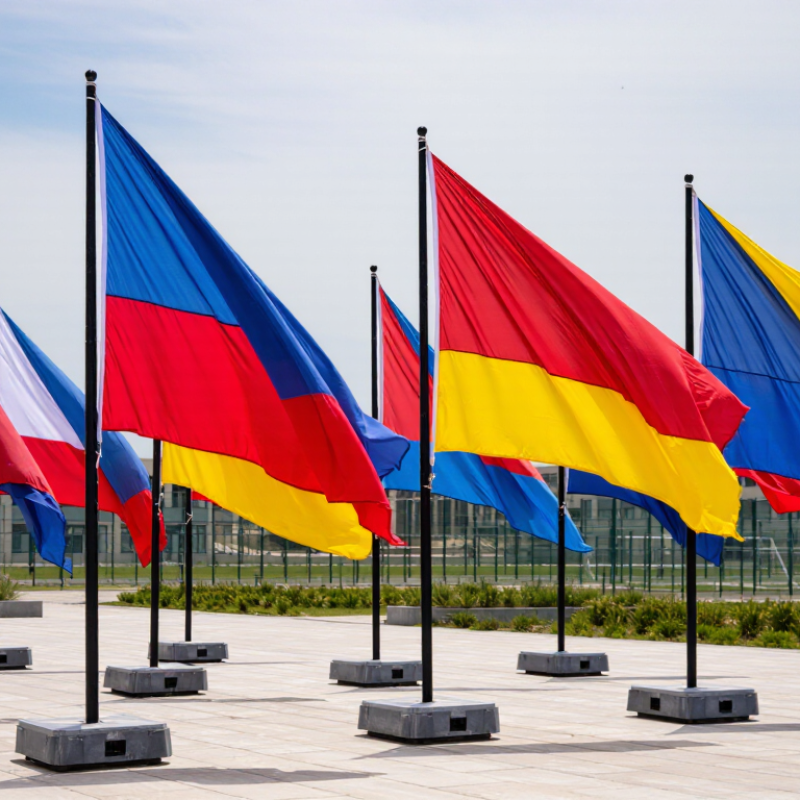
2026 Best Teardrop Pacer Flags for Global Buyers

What Are Teardrop Pacer Flags and How Do They Work?

Teardrop pacer flags are portable, feather-shaped markers used at races, training sessions, and public events. Their curved outline keeps the printed fabric visible while reducing flapping in moderate wind. Event teams may display pace times, distance points, meeting areas, or directional messages. The shape is not merely decorative. It helps spectators recognize a marker from a distance.

A teardrop pacer flag normally uses a flexible pole, stitched sleeve, printed fabric, and a weighted base. The pole creates the droplet profile. A swivel or flexible tip lets the fabric move around the pole instead of twisting tightly. Water bases suit paved areas, while ground spikes work better on grass or soil. I have found that base stability matters more than buyers expect, especially beside crowded running routes. A beautiful flag is useless if it falls after one gust.

Global buyers should check fabric density, double-sided visibility, UV resistance, stitching, and replacement-pole availability. Wind ratings need careful reading because suppliers may test them under different conditions. Avoid choosing only by the tallest size or lowest price. Oversized flags can become difficult to transport and manage. Language, local weather, import requirements, and event rules also affect the practical choice. Some printed colors look slightly different outdoors, which is easy to overlook. Testing one sample before a larger order remains a sensible step.

Key Features of the Best Teardrop Pacer Flags in 2026

2026 Best Teardrop Pacer Flags for Global Buyers

The best teardrop pacer flags combine clear visibility, stable hardware, and durable fabric. In practical event testing, a 110–120 gsm knitted polyester often balances color sharpness and airflow. Dye-sublimated graphics should remain readable from 30 meters, even under bright outdoor light. Grand View Research valued the global outdoor advertising market at about USD 38.6 billion in 2023. Its forecast suggests steady growth through 2030. This supports demand for portable, reusable event displays. Still, visibility claims can vary between suppliers.

A reliable flag needs a flexible fiberglass pole, a ground spike, and a weighted base option. The teardrop shape should keep the message facing viewers when wind changes. Look for reinforced pole sleeves and double-stitched edges. UV resistance matters in tropical markets. Water-repellent fabric also helps during short showers, although no fabric stays perfect forever. WARC’s 2024 Out of Home report projected continued global growth in outdoor advertising investment. Buyers should therefore compare replacement parts, packaging size, and regional shipping limits. These details affect real ownership costs.

Tips: Request a fabric sample before ordering. Test the flag outdoors for two hours. Check print visibility from several angles. Confirm wind guidance, base weight, and cleaning instructions. A compact carry bag helps frequent event teams. However, heavier bases improve stability but increase freight costs. That trade-off is easy to underestimate.

2026 Best Teardrop Pacer Flags for Global Buyers - Key Features of the Best Teardrop Pacer Flags in 2026

Evaluation Dimension Recommended Specification for 2026 Why It Matters to Global Buyers Practical Selection Standard
Flag Shape Teardrop profile with a curved outer edge and a lower point that remains visible when the fabric moves. The compact silhouette provides recognizable branding and directional visibility in outdoor spaces. Check that the printed area follows the actual curved template and does not leave excessive unused space.
Common Finished Heights Approximately 2.0–5.0 m, including the pole and ground base; exact dimensions vary by supplier. Different venues require different visibility levels, transport sizes, and installation clearances. Select the largest height that complies with local site rules and remains practical to transport.
Flag Fabric Knitted or woven polyester, commonly around 110–150 g/m² for outdoor display use. Polyester is lightweight, dries relatively quickly, and allows air to pass through the flag. Request fabric weight, weave type, color-fastness information, and a physical sample before large orders.
Printing Method Dye-sublimation or comparable outdoor-grade digital printing with edge-to-edge artwork. Dye-sublimation embeds color into polyester fibers and is widely used for vibrant fabric displays. Confirm whether the artwork is single-sided or double-sided and whether reverse-image visibility is expected.
Graphic Visibility Readable text, strong contrast, and a safe margin around logos and essential information. Flags are often viewed from a distance and while moving, so simple layouts perform better than dense copy. Use short messages, high-contrast colors, and keep critical content away from seams and the bottom point.
Pole Construction Segmented fiberglass, aluminum, or a hybrid pole with corrosion-resistant connectors. The pole must balance flexibility, low weight, repeated assembly, and resistance to outdoor moisture. Look for numbered sections, secure joints, replacement-part availability, and a protective carry bag.
Ground Base Options Ground spike for soil, cross base for hard surfaces, water-fillable base for temporary paved locations, or weighted plate for stable floors. The correct base improves stability and allows the same flag system to be used at different venues. Match the base to the surface; a cross base alone is not a substitute for ballast in stronger wind.
Wind Performance Designed to flex and rotate in light-to-moderate wind; no universal wind rating applies to every size and base. Wind load changes with flag size, exposure, anchoring method, and local weather conditions. Require a supplier-specific wind limit and remove the flag during storms or conditions beyond that limit.
Outdoor Durability Reinforced sleeve, double-stitched edges, UV-resistant inks, and rust-resistant hardware. Continuous exposure to sunlight, rain, abrasion, and wind can shorten the service life of weak components. Inspect stitching, pole joints, sleeve construction, and hardware finish rather than evaluating print quality alone.
Cleaning and Care Machine-washable or hand-washable polyester using mild detergent and cool water; air drying is preferred. Proper cleaning reduces staining while avoiding heat damage, shrinkage, and premature color fading. Request written care instructions and avoid bleach, harsh solvents, and high-temperature tumble drying.
Portability Collapsible pole sections, removable fabric, compact storage bag, and a total package weight suitable for event transport. Portable systems reduce freight volume and simplify installation for exhibitions, sports events, and retail promotions. Compare packed length, packed weight, number of packages, and replacement logistics before purchasing.
Safety and Compliance Stable base, rounded or protected edges, clear assembly instructions, and materials documented for the destination market. Public installations can create trip, falling-object, fire, or local permitting concerns. Verify venue requirements, local advertising rules, packaging labels, and any requested material declarations.
International Purchasing Factors Confirm metric dimensions, artwork file requirements, packaging details, spare-part supply, lead time, and shipping terms. Clear specifications reduce errors caused by different measurement systems, freight rules, and installation practices. Approve a digital proof and pre-production sample, then document the fabric, pole, base, packing, and inspection criteria.

Note: Specifications are typical industry guidance for teardrop outdoor flags. Final dimensions, wind limits, material performance, and compliance requirements should be confirmed for the selected configuration and destination market.

How to Choose Flag Size, Fabric, Pole, and Base

2026 Best Teardrop Pacer Flags for Global Buyers

Choosing the right teardrop pacer flag starts with its display location. For a roadside promotion, a 3–4 metre flag usually balances visibility and transport. Smaller 2–2.5 metre versions suit entrances, counters, and crowded event aisles. Measure the viewing distance, not only the available floor space. A flag that looks impressive online may become unreadable beside tall vehicles or temporary fencing.

Fabric affects color, movement, and service life. Textile Exchange’s Materials Market Report 2024 states that polyester represented about 57% of global fiber production in 2023. For outdoor flags, tightly woven polyester around 110–120 gsm offers a practical balance between brightness and airflow. Dye-sublimated graphics normally provide strong color penetration, but single-sided printing can appear weaker from the reverse. I have learned this after seeing a vivid front become dull in afternoon backlight. Review colorfastness data, stitching quality, and washing guidance before ordering.

Pole selection should match flag height and local wind exposure. Fiberglass poles are light and flexible, while aluminum sections can feel more rigid during repeated setup. The base deserves equal attention. Cross bases work on hard floors, while water or sand bases provide better stability outdoors. The World Out of Home Organization reported global out-of-home advertising revenue above 40 billion dollars in 2023, showing how heavily public displays are used. Yet foot traffic and wind vary widely. Check the supplier’s wind rating, inspect connectors regularly, and avoid assuming a heavier base solves every safety problem.

Top Buying Factors for Global Markets and Outdoor Conditions

2026 Best Teardrop Pacer Flags for Global Buyers

Selecting a teardrop pacer flag for global use requires more than attractive printing. Outdoor conditions vary sharply between coastal paths, dry plains, and crowded event grounds. I recommend checking fabric weight, UV resistance, stitching quality, and pole flexibility before comparing prices. A tightly sewn hem prevents early fraying. Reinforced pockets also matter during repeated setup.

Wind is often the deciding factor. A cross base suits firm pavement, while a ground spike offers better stability in soil. For softer ground, add a water or sand weight when local conditions allow it. Always inspect the base connection, because this small part often receives the greatest strain.

Test the complete flag outdoors, not only indoors. Short trials can reveal twisting, noise, or poor balance.

Global buyers should request clear dimensions, packed weight, replacement-part availability, and care instructions. Printing should remain readable from several meters away, even after folding. Check color samples under natural daylight. Screen colors can mislead. Shipping size affects freight costs and storage space, especially for small event teams.

Local weather data should guide the final choice, but forecasts are never perfect. I have seen sturdy poles fail when bases were matched poorly. That is an easy mistake to repeat. A reliable supplier should explain testing methods, material specifications, and reasonable limits without promising universal performance.

Care, Transport, and Long-Term Use of Teardrop Pacer Flags

Teardrop pacer flags need careful handling from purchase to daily display. For global buyers, durable polyester, reinforced stitching, and a flexible pole are practical features. Check the fabric density, sleeve seams, base fittings, and printed edges before ordering. A strong flag should return to shape after moderate wind, but no fabric lasts forever.

Keep the flag clean with cool water and mild soap. Avoid bleach, rough brushes, and hot dryers. Let it dry fully before storage. Moisture causes trouble.

During transport, separate the fabric from the pole when possible. Roll the flag loosely around a soft core instead of folding it sharply. Never pack a damp flag. Use a breathable carry bag, not a sealed plastic wrap for long periods.

In a vehicle, secure the pole sections so they cannot rub against metal edges. For international shipping, protect connectors and bases with light padding. At every setup, inspect the stitching, pole joints, and ground base. A loose connector can damage the flag in changing wind.

I once stored a nearly dry flag overnight, then found mildew near the sleeve. That mistake was avoidable.

For long-term use, rotate several flags when possible, record cleaning dates, and keep spare fittings in a labeled container. Fading, fraying, or repeated pole bending means the display needs repair or replacement.