

Choosing an office shipping container begins with more than price, paint, or advertised capacity. It requires a practical review of cargo data, site conditions, and workplace expectations. UNCTAD’s Review of Maritime Transport 2023 reports that more than 80% of global merchandise trade by volume moves by sea. That scale explains why small specification errors can cause delays, damage, and costly rehandling. An office shipping container must protect equipment while supporting safe, comfortable daily work.
The right choice connects ISO dimensions with real operational needs. Check external and internal measurements, door clearance, payload, tare weight, and floor condition. A standard 20-foot container may provide useful office space, but insulation, wiring, furniture, and ventilation reduce the available area. Confirm corner fittings and lifting points before arranging delivery. When international transport applies, verify the container’s valid CSC safety plate and inspection records. Steel heats quickly. Poor ventilation can make a bright office uncomfortable within minutes.
The World Bank’s 2023 Logistics Performance Index identifies timeliness, tracking, and logistics competence as key supply-chain performance dimensions. These factors should influence your supplier evaluation. Request dated photographs, repair history, certification details, and a clear delivery method. Ask how the unit will be unloaded beside your building. There is no perfect container. A refurbished unit may reduce cost, yet hidden rust or uneven flooring can create later expenses. A new unit offers consistency, but not always the best value. I may sound cautious, because the first specification is rarely complete. This guide compares container sizes, conditions, security features, insulation options, and workplace modifications, helping buyers select a reliable solution without overlooking practical limits.
How to Choose an Office Shipping Container?
Define Your Office Shipping Container Requirements
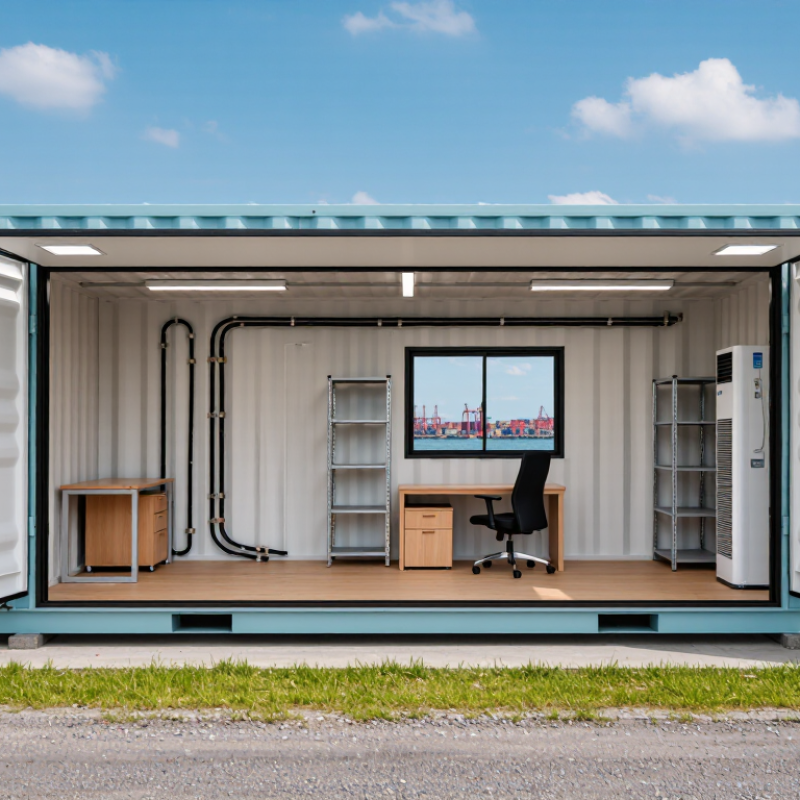
Start with the work your container must support. List desks, chairs, cabinets, computers, and storage equipment. Measure each item, including door clearance and walking space. A floor plan prevents costly guesses. A 20-foot unit may suit a small team, while larger operations may need extra modules. Do not calculate by floor area alone. People need room to move.
Record the site conditions before selecting a container. Check delivery access, ground stability, sunlight, drainage, and nearby power connections. A narrow entrance can make a suitable container unusable. Note the local climate too. Insulation, ventilation, windows, and heating may become essential in extreme temperatures. Ask how long the office will operate. Short-term use may need different finishes than a permanent workspace.
Security and daily comfort also shape the requirements. Specify lockable doors, safe lighting, cable routes, and enough outlets for actual equipment. Protect sensitive documents with controlled storage. Confirm the container’s condition, structural strength, and previous use through inspection records. Small defects matter. A slightly uneven floor can complicate desks and wiring. My planning estimates would still be imperfect without a site visit, so leave space for changes. A flexible design often serves better than the cheapest option.
The chart compares the approximate internal floor area of common container formats used for office conversion. A standard 20-foot container provides about 13.9 m², while standard 40-foot and 40-foot high-cube containers provide about 28.3 m².
Choose the size according to the number of occupants, desk layout, storage needs, and required circulation space. A 40-foot high-cube container has a similar floor area to a standard 40-foot container but offers greater internal height, making it more suitable when ceiling clearance, insulation, lighting, or ventilation systems are important.
Choosing an office shipping container starts with the cargo, not the container’s appearance. Corrugated cartons suit light files, monitors, and boxed supplies. Plywood crates offer stronger walls for servers, desks, and irregular equipment. Reusable plastic totes resist moisture and repeated handling, but their purchase cost can be higher. I have seen teams select by volume alone, then discover that fragile screens need internal bracing.
Size affects both protection and transport efficiency. ISO 668 defines common 20-foot and 40-foot container dimensions. A 20-foot unit provides roughly 33 cubic metres of internal volume, while a 40-foot unit provides about 67 cubic metres. Exact capacity varies with construction and fittings. UNCTAD’s Review of Maritime Transport 2023 reported a global container fleet exceeding 26 million TEU, showing how standardized sizes support international logistics. Still, unused space can let equipment move during transit.
Protective features deserve closer comparison. Look for foam corners, stretch restraints, moisture barriers, shock indicators, and tamper-evident seals. For sensitive electronics, specify vibration control and desiccant packs. ISTA 3A testing evaluates packaged products through drops, vibration, compression, and atmospheric conditioning. That testing is useful, but it does not guarantee safe handling on every route. Check the package’s tested weight and dimensions against the real shipment. A small oversight matters. For office moves, I would also photograph the packed container, record serial numbers, and inspect floor loading limits. These steps feel slow, yet missing evidence can make a damage claim difficult.
| Container Type | Typical Sizes | Typical Payload Range | Best for | Protective Features | Handling and Stacking | Limitations |
|---|---|---|---|---|---|---|
| Single-Wall Corrugated Carton | 12 × 10 × 8 in 16 × 12 × 12 in 18 × 14 × 12 in |
Approximately 20–40 lb, depending on board grade, box size, and contents | General office supplies, files, stationery, small electronics, and desk accessories | Lightweight fluted paperboard provides cushioning, surface protection, and moderate compression strength | Easy to label, tape, lift, and recycle; stack only when the box is properly filled and sealed | Offers limited moisture, puncture, and crush resistance; not ideal for very heavy or fragile equipment |
| Double-Wall Corrugated Carton | 18 × 14 × 12 in 24 × 18 × 18 in 24 × 24 × 24 in |
Approximately 40–80 lb, depending on construction and packing method | Monitors, printers, heavier files, multiple office machines, and longer-distance shipments | Two layers of fluting provide greater puncture resistance, edge protection, and stacking strength than single-wall cartons | Suitable for palletizing when weight is distributed evenly; use reinforced tape on seams | Heavier and more expensive than single-wall cartons; still requires internal cushioning for impact-sensitive items |
| Document and File Carton | Approximately 15 × 12 × 10 in 18 × 15 × 10 in |
Recommended working load of approximately 20–35 lb for safe manual handling | Paper files, folders, binders, archived records, and books | Compact dimensions reduce shifting; reinforced hand holes and fitted lids may improve handling and closure | Keep boxes small enough to lift safely; label contents and place heavier files at the bottom | Paper becomes extremely heavy when densely packed; avoid overfilling or using damaged cartons |
| Padded Mailer | Approximately 9 × 13 in 12 × 15 in 14 × 19 in |
Usually suitable for items weighing less than 5–10 lb | Cables, keyboards, adapters, small accessories, manuals, and other non-fragile items | Paper or polyethylene exterior with bubble or fiber padding helps reduce scuffing and minor impacts | Lightweight and efficient for individual shipments; do not rely on the mailer alone for rigid or fragile products | Limited shape support, stacking strength, and puncture protection; not suitable for heavy equipment |
| Reusable Plastic Tote with Lid | Approximately 18 × 12 × 10 in 27 × 17 × 14 in 30 × 20 × 15 in |
Approximately 40–70 lb, subject to tote design and safe lifting limits | Repeated office moves, IT accessories, cables, supplies, and items requiring moisture resistance | Rigid walls, fitted lids, stackable geometry, and better resistance to moisture and repeated handling than paper cartons | Reusable, easy to sanitize, and generally stable when nested or stacked according to the manufacturer’s instructions | Higher purchase cost, greater empty weight, and less efficient recycling than corrugated cartons |
| Foam-Fitted Equipment Case | Approximately 18 × 14 × 8 in 24 × 18 × 12 in 30 × 20 × 14 in |
Approximately 15–60 lb, depending on case size and shell construction | Laptops, cameras, measurement devices, sensitive electronics, and presentation equipment | Custom-cut or layered foam limits movement and reduces shock transfer; rigid shells improve crush and puncture resistance | Good for repeated transport; secure latches and handles support controlled handling | More expensive and less space-efficient than cartons; foam must be sized correctly to prevent movement |
| Wooden Crate or Plywood Case | Custom-built; common examples include 24 × 18 × 18 in and larger | Approximately 100 lb and above, depending on construction and base design | Large printers, furniture components, heavy equipment, artwork, and fragile items requiring rigid protection | High resistance to puncture and crushing; internal blocking, bracing, foam, and shock-absorbing materials can be added | Can be built for pallet-jack or forklift handling; use a strong base and clearly marked lifting points | Heavy, costly, and difficult to unpack; wood packaging used in international trade may require approved treatment and marking |
| Steel Intermodal Shipping Container | 20-foot unit: approximately 19 ft 4 in × 7 ft 8 in × 7 ft 10 in internal space 40-foot unit: approximately 39 ft 5 in × 7 ft 8 in × 7 ft 10 in internal space |
Maximum payload varies by unit and transport regulations; commonly tens of thousands of pounds | Full office relocations, bulk furniture, palletized equipment, and long-term storage | Weather-resistant steel shell, lockable doors, high security, and strong protection from ordinary handling impacts | Designed for crane, chassis, and forklift logistics; cargo should be blocked, braced, and protected from condensation | Not practical for small shipments; interior moisture and temperature changes can damage paper and electronics without proper packing |
How to Choose an Office Shipping Container?
Material choice affects protection, handling, and workplace safety. Corrugated fiberboard suits lighter items, such as files, keyboards, and desk accessories. Choose double-wall construction for heavier equipment or longer transport routes. Plywood provides stronger support for monitors, printers, and compact machinery. Plastic containers resist moisture and repeated handling, but they can become slippery when wet. Steel offers excellent impact resistance, although its weight may increase lifting risks.
Inspect the container before loading. Check seams, hinges, corners, and the floor for cracks or bending. A container should support the intended load without bulging or collapsing. Use internal padding to prevent screens from touching hard surfaces. Secure loose items with straps or dividers. Leave no sharp edges exposed. Small details matter.
Workplace safety requires more than a strong container. Confirm that handles are comfortable and positioned for two-person lifting. Keep the total weight within your workplace lifting policy, not just the container’s rated capacity. Store loaded containers away from walkways, emergency exits, and unstable shelving. Labels should show weight, handling direction, and fragile contents. Do not stack containers unless the manufacturer’s instructions permit it. A heavier container is not automatically safer. It may protect equipment better while creating a serious strain hazard. I would also recheck the packing method after the first move, because a design that looks efficient can still fail during daily handling.
An office shipping container should match the equipment it protects and the people moving it. Measure desks, monitors, filing cabinets, and packed cartons before ordering. Leave space for padding, hand access, and safe lifting. A container that fits perfectly may still fail during loading.
Check the container’s weight, door width, handles, and base strength. Can two workers carry it safely, or does it require a pallet jack? In a packing review, I once underestimated the weight of boxed documents. The container looked practical, but lifting it became awkward. That mistake showed why empty weight and loaded weight must be recorded separately.
Storage conditions matter too. For paper records, use a dry, clean interior and protect contents from condensation. For electronic equipment, add cushioning and avoid direct contact with damp surfaces. Measure the storage room, aisle width, and shelf height. Tight corners can damage both containers and walls. They can also slow inventory checks.
Transportation compatibility deserves equal attention. Confirm that the container fits the vehicle, pallet size, and securing equipment. Use straps or blocking when movement is possible. Do not rely on a closed door to prevent shifting. Check whether repeated loading will weaken hinges, wheels, or seals. Labels should remain readable after handling, though they sometimes peel sooner than expected. A small test shipment can expose problems before a larger office move.
Choosing an office shipping container starts with the supplier’s total cost, not the lowest quotation. UNCTAD’s Review of Maritime Transport 2023 reports that shipping carries over 80% of global trade by volume. Delays can therefore affect equipment, furniture, and opening schedules. Request separate prices for the container, transport, loading, insurance, unloading, and storage. Ask about fuel surcharges and detention fees. Small exclusions often become expensive.
A practical supplier should provide inspection photos, container dimensions, payload limits, delivery times, and written damage procedures. The World Bank’s Logistics Performance Index 2023 evaluates reliability, tracking, customs, infrastructure, and timeliness. Use those same questions during supplier checks. Compare at least three detailed quotations, not three headline prices. Plan the loading route before booking. Measure doorways, lift access, parking space, and floor strength. Leave a little capacity unused.
That detail matters.
For office equipment, protect monitors with foam corners and separate heavy items from fragile ones. Choose a clean, weather-resistant container with secure locking points. A spreadsheet helps, but it can still miss local access problems. I once treated unloading as a minor cost; the site required extra labor and a longer vehicle. That mistake changed the final budget. A reliable supplier should explain these risks plainly, even when the explanation weakens the sale.
| Cookie | Duration | Description |
|---|---|---|
| cookielawinfo-checkbox-analytics | 11 months | This cookie is set by GDPR Cookie Consent plugin. The cookie is used to store the user consent for the cookies in the category "Analytics". |
| cookielawinfo-checkbox-functional | 11 months | The cookie is set by GDPR cookie consent to record the user consent for the cookies in the category "Functional". |
| cookielawinfo-checkbox-necessary | 11 months | This cookie is set by GDPR Cookie Consent plugin. The cookies is used to store the user consent for the cookies in the category "Necessary". |
| cookielawinfo-checkbox-others | 11 months | This cookie is set by GDPR Cookie Consent plugin. The cookie is used to store the user consent for the cookies in the category "Other. |
| cookielawinfo-checkbox-performance | 11 months | This cookie is set by GDPR Cookie Consent plugin. The cookie is used to store the user consent for the cookies in the category "Performance". |
| viewed_cookie_policy | 11 months | The cookie is set by the GDPR Cookie Consent plugin and is used to store whether or not user has consented to the use of cookies. It does not store any personal data. |